Cervical Mucus and Charting
In conception, cervical mucus is an essential element because it nourishes and protects sperm, keeping them alive for up to five days inside your cervix,…
Stage 1 of 5
Trying to conceive — ovulation, cervical mucus, fertility charting, and when to talk with a clinician about trouble conceiving.
In conception, cervical mucus is an essential element because it nourishes and protects sperm, keeping them alive for up to five days inside your cervix,…
A combination of charting your basal body temperature (BBT), cervical mucus and cervical position and shape will indicate when the most fertile time of your…
Most often treatment of ectopic pregnancy is surgically. Usually the doctor's goal is to remove the pregnancy while preserving fertility. Which technique…
For fertility, charting your mood swings, thoughts, emotions and energy level along with your cervical mucus and changes, your other physical changes and…
One can increase their chances of getting pregnancy and increasing fertility. Most people believe the most fertile days during their cycle is 14 days after…
Fertility charting is basically a pregnancy achievement technique. It requires recording all of your fertility signs on a chart; allowing you to track…
To chart your fertility, the only tools you need are a 'calendar' or fertility chart/graph and a basal body thermometer. Basal thermometers are more…
Infertility affects men and women equally. In both men and women, multiple factors can account for difficulty with fertility. Male factors attribute to…
Most couples are advised to wait until they have been trying to conceive for at least a year, before seeking medical help, with the exception of couples…
The most common female infertility factor is ovulation disorders. Disruption in the part of the brain that regulates ovulation can cause deficiencies in…
Infertility is a fairly common medical condition that affects over 6 million Americans (15% of couples of reproductive age), with over 9 million women…
Days 9- 12 of Your Cycle Your uterine lining is building up, thickening and becoming engorged with extra blood and tissue. Blood vessels are enlarging…
Days 13- 16 of your cycle Your estrogen level increases and then drops all-of-a-sudden, triggering your pituitary gland to release a surge of luteinizing…
Knowing and understanding what leads up to ovulation and when you ovulate will allow you to make love on the most fertile days of your cycle and increase…
As soon as the LH surge is detected, successful fertilization is most likely to take place one to three days afterwards, with peak fertility at about 36…
Ovulation Predictor. [ovulation-predictor]
Besides changes to your cervix around the time of ovulation, you may also notice other physical changes. Spotting and bleeding may occur mid-cycle,…
In addition to cervical changes, temperature fluctuations, and changes in your cervical mucus during your monthly cycle, many women experience other…

[LINK_START:https://www.pregnancylounge.com/wp-content/uploads/chart.jpg][LINK_END]Charting your BBT allows you to confirm the onset of ovulation, making it…
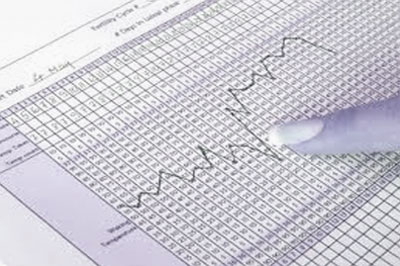
[LINK_START:https://www.pregnancylounge.com/getting-pregnant1][LINK_END]A combination of charting your basal body temperature (BBT), cervical mucus and…
Trying to conceive or getting pregnant can be as simple as discontinuing contraception for some women, but for many others it can take a while to increase…
(continued "preconception") These special preconception recommendations, developed through a consultation process with a select panel of specialists,…
Pregnancy Symptoms can be confusing at times since tender breasts can indicate early pregnancy. It can also be a sign of an expected menstrual period. A…
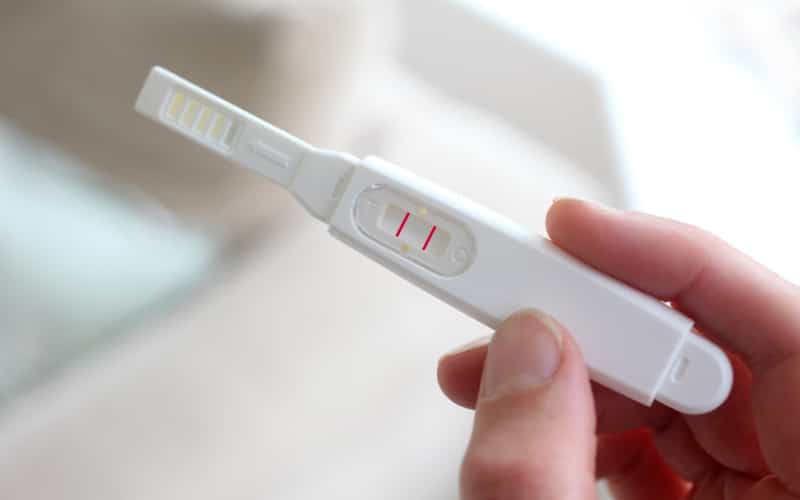
A pregnancy test, as the name implies, is simply a test used to determine whether or not a woman is pregnant. Often used early in the form of a home…
[LINK_START:https://www.pregnancylounge.com/wp-content/uploads/pregnancy-test1.jpg][LINK_END]Most at home early pregnancy tests allow you to read the result…
A note on care: information on this page is educational. Symptoms vary, and only a qualified provider can assess your individual pregnancy. If something feels wrong, call your doctor, midwife, or maternity unit.