Tag: pregnancy

  • Pregnancy Symptoms Calendar and Timeline

    Pregnancy Symptoms Calendar and Timeline

    The top pregnancy symptoms are: a missed menstrual period, tender breasts, morning sickness and nausea, fatigue, frequent urination, headaches, spotting, light headedness or faint, swelling and heartburn. Below is a pregnancy calendar the timeline that you are most likely to have them:


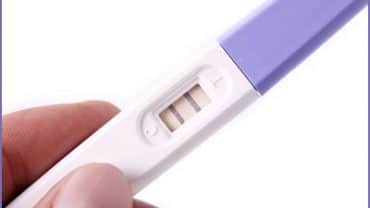
    Missed Period

    Months 2 through 9

    Tender Breasts

    Months 2 through 9

    Morning Sickness

    Months 2 through 5

    Fatigue and Exhaustion

    Months 2, 3, 4 and 9

    Headaches

    Months 2 through 5

    Spotting

    Months 1 through 3

    Light Headedness or Faint

    Months 2 through 5

    Swelling

    Months 8 and 9

    Heartburn

    Months 2, 3, 4 and 9

    Varicose Veins

    Months 7, 8 and 9

    Hemmorhoids

    Months 8 and 9

  • Early Pregnancy Symptoms

    Pregnancy symptoms vary greatly in intensity and duration from one woman to another. They also vary from pregnancy to pregnancy. For most women, a missed period is the first clue of pregnancy, followed by nausea and/or vomiting (morning sickness) and breast tenderness. But if you don’t have regular periods, you’ll have to watch for other symptoms.

    Some women start to notice symptoms within days after conception, while other women’s symptoms may develop over a few weeks. A lucky few may never feel any symptoms or have any discomfort at all. Most pregnancy symptoms occur due to rapid hormonal changes in your body following implantation of the egg in the lining of your uterus.

    Knowing and understanding pregnancy symptoms is important because each symptom may be related to something other than pregnancy, including pre-menstrual symptoms and illness. Early pregnancy symptoms can be confusing and often misleading, either making you believe you are pregnant when you are not, or not pregnant when you are in fact pregnant.

    If you have one (or more) pregnancy symptom and suspect you may be pregnant, the next step is to take a home pregnancy test or better yet, have a blood test done at your doctor’s office. Most home pregnancy tests can be taken about 10-14 days after conception or the day following when you expected your period. Blood tests can usually detect if you are pregnant even sooner.

    Earliest Pregnancy Symptoms (first trimester):

    • Implantation bleeding or spotting (usually before your period is due)
    • A missed period, a shorter, lighter period
    • Breast tenderness or swelling
    • Tingling, sore nipples, darkening of areola (skin around nipples)
    • Skin changes, breakouts
    • Nausea, vomiting
    • Constipation, flatulence (gas)
    • Frequent urination
    • Fatigue, sleepiness
    • Food cravings, food aversions, appetite loss
    • Moodiness, irritability
    • Backaches
    • Headaches
    • Increased sense of smell
    • Mild lower abdominal cramps, bloating
    • Continuous elevated basal body temperature
    • Dizziness, fainting
    • Sensitive, bleeding, or swollen gums, excessive salivation
    • Heartburn, indigestion
    • Cervical, vaginal changes (tissue color), sensitivity of the cervix

    Later Pregnancy Symptoms:

    • Weight gain
    • Mild edema (swelling of ankles, hands, feet, and face)
    • White vaginal discharge (leukorrhea)
    • Increased appetite
    • Quickening (earliest fetal movement)
    • Nasal congestion and ear stuffiness, occasional nose bleeds
    • Expanding waistline
    • Abdominal achiness
    • Visible veins, varicose veins
    • Trouble sleeping
    • Breast enlargement
    • Hemorrhoids
    • Leg cramps
    • Dark line down abdomen (linea nigra)
    • Itchy, dry abdomen
  • Pregnancy Headaches

    Pregnancy Headaches

    Headaches while pregnant are common and begin at about the 6th week. A quick nap can help prevent headaches while pregnant. Preeclampsia or toxemia can begin with headache and can be dangerous to a pregnant woman. If you are pregnant and get headaches that don’t go away when resting, check with your doctor and make sure you share that information with him at your next visit.

    Spotting

    Spotting is common in early pregnancy. Some women report what seems to be a short light period before the onset of other symptoms. This may be implantation bleeding and not a menstrual period at all (when the egg implants itself into the lining of the uterus). If you are pregnant and you experience spotting check in with your doctor as spotting is also an indicator of miscarriage.

    Light Headedness

    Some pregnant women experience actual fainting and light headedness during early pregnancy.

    Constipation

    Hormonal changes can affect the digestive system and cause constipation. Drinking plenty of water and exercising can help. A pregnant woman should ask her doctor for recommended exercises while pregnant.

    Heartburn

    Heartburn in pregnancy can be symptom in months 1-9. In months 1-4, heartburn is caused by hormonal changes. In months 5-9, the baby can cause pressure on a pregnant woman’s organs. Eating frequent smaller meals and remaining in an upright position at least an hour after eating can help.

    more Pregnancy Symptoms

  • Pregnancy Tests

    Pregnancy Tests

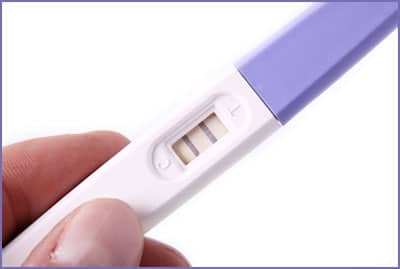
    Most at home early pregnancy tests allow you to read the result as soon as 2-3 minutes after taking the test, but many have time limits- meaning not to read the result after a specified length of time. The accuracy of home pregnancy tests depends on how closely you follow the instructions. If you do a home pregnancy test four to seven days after your missed period, it will be positive 95 percent of the time (assuming you are pregnant).

    How an Early Pregnancy Test Works

    About four days after conception, the fertilized egg begins to produce a hormone called human chorionic gonadotropin (or hCG for short). One of the first tasks of this hormone is to notify the ovaries that you are pregnant and no more ovulations are needed for a long time. The signal also directs the ovary to help retain the endometrium (the uterine lining) and prevent your menstrual period, which would expel the newly-attached embryo from your uterus.

    Human chorionic gonadutropin (hCG) can be detected first in your blood and shortly thereafter in your urine. Most tests can tell you if you’re pregnant as early as the first day of your missed period (about 14 days after conception) or even earlier. The tests were created to detect the presence of hCG in your urine. If there is hCG detected in your urine, it reacts with the chemicals on the test strip to create a “+” sign or a second line in the result window (depending on what brand of test you use). Remember, whether the makers of the test claim you can take the test any time of the day, first- morning urine always contains the highest concentration of hCG.

    The major drawback with home pregnancy tests is that when done in the early days of pregnancy, sometimes it will indicate you’re not pregnant, when in fact you are. This can occur because levels of hCG are low in early pregnancy and can go undetected. For this reason, test results that indicate you are not pregnant are more often wrong than test results that indicate you are pregnant.

    Home pregnancy tests are not designed to take the place of a consultation with your doctor. They should be considered screening tests only. If your test result is negative, but your period is late and you have symptoms of pregnancy, consult your health care provider. If your result is positive, make an appointment with your doctor for confirmation and a complete prenatal check-up.

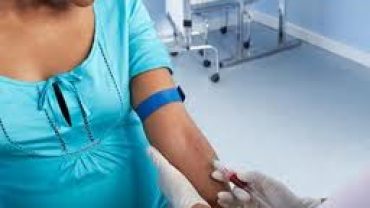
    Blood pregnancy tests are very accurate and can detect the presence of hCG as early as one week after conception. They can also be helpful in determining how far along you are by measuring the exact amount of hCG in your blood, since the levels tend to double about every two days in early pregnancy.

  • Maternal Serum Alpha-Fetoprotein (MSAFP) Test

    Maternal Serum Alpha-Fetoprotein (MSAFP) Test

    This is a blood test which measures the level of alpha-fetoprotein (AFP) in your blood. It’s designed to indicate an increased risk for fetal open neural tube defects, such as spina bifida and may also indicate an increased risk for Down syndrome.

    With the MSAFP Test there is a possibility of a “false negative” as well as a “false positive”, since no screening test is perfect.

    This test is usually done between the 16th and 18th week of pregnancy.

    More Tests

    Amniocentesis
    Chorionic Villus Sampling (CVS)
    Contraction Stress test (CST)
    Glucose Tolerance Testing
    Hemoglobin Test
    Non-Stress (NST) Test
    Rh Factor
    Triple Screen Test
    Ultrasound

  • Hemoglobin Test

    Hemoglobin Test

    A protein found in red blood cells is called hemoglobin. By measuring your hemoglobin level during pregnancy, your doctor can determine whether you have anemia.

    If you do become anemic, your doctor will advise you about changes in your diet and may recommend an iron supplement.

    This test is normally done during your first prenatal visit, along with other lab work, but it may be done more often if you are found to be anemic.

    More Tests

    Amniocentesis
    Chorionic Villus Sampling (CVS)
    Contraction Stress test (CST)
    Glucose Tolerance Testing
    MSAFPT Test
    Non-Stress (NST) Test
    Rh Factor
    Triple Screen Test
    Ultrasound

  • Glucose Tolerance Test

    Glucose Tolerance Test

    This “Glucose Tolerance Test” is performed routinely to determine whether you have gestational diabetes.

    Gestational diabetes is a form of diabetes that can develop in a pregnant woman who didn’t have diabetes before pregnancy. It is caused by changes in a pregnant woman’s metabolism and hormone production.

    The risk of gestational diabetes is higher in women over 30, who have a family history of diabetes, or who are obese.

    A glucose tolerance test is usually done between the 24th and 28th weeks of pregnancy. You will be asked to drink a glucose solution and after an hour, blood is drawn and the glucose level is checked. About 15 percent of pregnant women who are given a glucose tolerance test will have abnormal levels and a second test is done.

    More Prenatal Tests

    Amniocentesis
    Chorionic Villus Sampling (CVS)
    Contraction Stress test (CST)
    Hemoglobin Test
    MSAFPT Test
    Non-Stress (NST) Test
    Rh Factor
    Triple Screen Test
    Ultrasound


  • Contraction Stress Test

    The “Contraction Stress Test” is another prenatal test used to help evaluate the condition of your baby and is often done when a non-stress test is non-reactive, or in some high-risk pregnancies to check whether the blood flow to the baby is adequate.

    Just like the non-stress test, the contraction stress test is done during the third trimester.

    The CST measures your baby’s heart rate in response to contractions of your uterus. The difference is that your doctor will be looking at the heart rate during uterine contractions, rather than in response to movements.

    More Tests

    Amniocentesis
    Chorionic Villus Sampling (CVS)
    Glucose Tolerance Testing
    Hemoglobin Test
    MSAFPT Test
    Non-Stress (NST) Test
    Rh Factor
    Triple Screen Test
    Ultrasound

  • Chorionic Villus Sampling (CVS)

    Chorionic Villus Sampling (CVS)

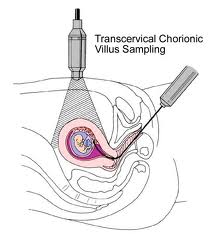
    Chorionic villus sampling is usually done early in pregnancy between the 9th and 13th week. This is a procedure that involves removing a sample of chorionic villi cells from the placenta at the point where it attaches to the uterine wall.
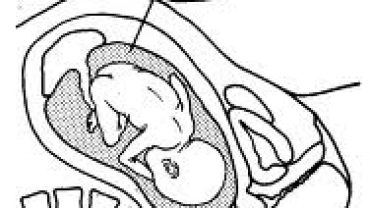
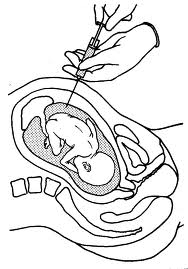
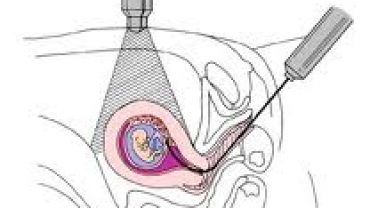
    In the more common trans-cervical method, ultrasound is used to guide a thin catheter through your cervix to the placenta. A small amount of chorionic villi cells are gently suctioned into the catheter. The trans-abdominal method is similar to amniocentesis and depends on ultrasound guidance. A long, thin needle is inserted through your abdomen into the placenta, where a small sample is withdrawn.

    CVS is done for many reasons, but the main reason is for early detection of chromosome abnormalities, such as Down syndrome and other genetic disorders. CVS cannot diagnose neural tube defects because it doesn’t sample any amniotic fluid for testing levels of AFP.

    The risk of a pregnancy ending in miscarriage are higher with CVS (one in 100) than with amniocentesis. Recent studies suggesting an association between CVS and limb malformation have made some doctors hesitant to offer this procedure.

    Since CVS provides a larger sample of cells than amniocentesis, results take a little less time to obtain. Some results may be possible within a day or two.

    More Prenatal Tests

    Amniocentesis
    Contraction Stress test (CST)
    Glucose Tolerance Testing
    Hemoglobin Test
    MSAFPT Test
    Non-Stress (NST) Test
    Rh Factor
    Triple Screen Test
    Ultrasound

  • Amniocentesis

    Amniocentesis

    The amniocentesis test is a test in which a needle is used to remove a sample of fluid from the amniotic sac surrounding your baby. The amniotic fluid, which contains cell shed by your baby, is then studied in a lab for analysis. If done for chromosome analysis, amniocentesis is usually performed after the 16th week of pregnancy. If a woman needs to give birth early for some medical reason, amniocentesis might be done shortly before delivery to asses fetal lung maturity.
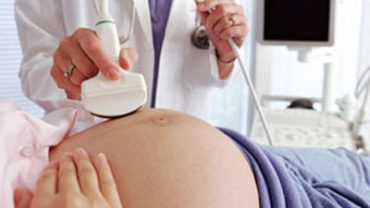
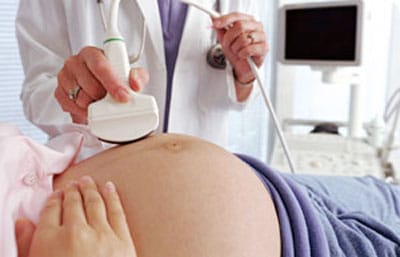

    In the first half of your pregnancy, your doctor may offer amniocentesis if your baby is suspected to be at increased risk for chromosome abnormalities, inherited disorders or neural tube defects. A chromosome analysis will also establish the gender of your baby (but amniocentesis is not offered for gender determination along.)

    Amniocentesis is considered to be a relatively safe procedure. The risk of miscarriage caused by amniocentesis ranges from one in 200 to one in 400. In the rare instances tat amniocentesis causes a miscarriage, it is usually because an infection develops in your uterus, the water breaks or labor is induced prematurely. It is not uncommon for women to experience mild complications such as cramping or water leakage or discomfort around the needle site.

    The procedure takes about 45 minutes. Your abdomen is cleansed with antiseptic. Some doctors offer a local anesthetic, which can be injected near the site to numb your abdomen. A long, hollow needle is placed through your abdominal wall and into your uterus. A small sample of fluid is withdrawn. Usually the results are back within a few days, although some require up to a week to obtain.

    More Prenatal Tests

    Chorionic Villus Sampling (CVS)
    Contraction Stress test (CST)
    Glucose Tolerance Testing
    Hemoglobin Test
    MSAFPT Test
    Non-Stress (NST) Test
    Rh Factor
    Triple Screen Test
    Ultrasound

  • Prenatal Tests

    Prenatal Tests

    The use of prenatal tests has become available since the 1980s and it can provide valuable information about the health of your baby.

    Prenatal testing can be helpful in determining any special care your baby may require during pregnancy and after he or she is born.

    Knowing about birth defects before your baby is born can also help you and your partner prepare for any challenges ahead.

    As you consider which prenatal tests are appropriate for you, think about the risks and benefits of each.

    Types of Prenatal Tests

    Amniocentesis
    Chorionic Villus Sampling (CVS)
    Contraction Stress test (CST)
    Glucose Tolerance Testing
    Hemoglobin Test
    MSAFPT Test
    Non-Stress (NST) Test
    Rh Factor
    Triple Screen Test
    Ultrasound

  • Morning Sickness Remedies

    Morning Sickness Remedies

    Diet is the best tool to minimize morning sickness discomfort and make it more bearable. Sometimes you may reduce nausea and vomiting by making changes in your diet and eating habits.

    Keep a few simple snacks by your bed, such as soda crackers, graham crackers, granola bars, rice cakes, dry cereal or pretzels. Eating carbohydrate-rich foods and foods high in protein, especially right before you get up in the morning, may help combat nausea. Nibble a few crackers and then rest for 20- 30 minutes before getting out of bed. Snacking on crackers may also help you feel better if you wake up feeling nauseated in the middle of the night.

    Due to increased estrogen levels, pregnant women are particularly sensitive to smells. Try to avoid the sight, smell, and taste of foods that bother you and make you queasy. Many pregnant women want to avoid any activity that has to do with food when they are feeling sick, including cooking meals and grocery shopping. Have your partner prepare meals and shop for food, when possible. Also, when cooking (or when your partner is cooking), make sure to keep windows open and have a fan on to minimize food odors that might trigger nausea.

    The nausea experienced during pregnancy is one of the few that is relieved by having food in the stomach. Eat before nausea strikes, because food will be easier to get down and that way, you may be able to prevent an attack. Eat small, frequent meals or snacks throughout the day (as often as every 1-2 hours if necessary), so that your stomach is never empty, since an empty stomach tends to make morning sickness worse. Low blood sugar levels, resulting from long stretches between meals, can trigger nausea, as can eating too much at one meal. Large meals are to be avoided.

    Women with a higher intake of fat may be more likely to suffer morning sickness than those with less saturated fat. Limit or eliminate fatty, greasy and fried foods, which take longer to digest, particularly during pregnancy when your stomach takes longer to empty. Try to avoid spicy foods which can irritate your stomach and digestive system. Stick to good old bland foods.

    It’s best to avoid fluids at meal time. Drink small amounts of fluids primarily in between meals instead. Don’t drink so much at once that your stomach feels full, as that will make you less hungry for food, although make sure you get plenty of water throughout the day to keep yourself well-hydrated, especially if you are vomiting. Sometimes drinks at cold temperatures help curb nausea better than hot drinks. Fruit juices, Gatorade and popsicles are helpful, as well as sucking on ice chips (an ice pack on your forehead might even help!) Keep caffeine intake to a minimum as it can make you feel worse, contribute to dehydration and further irritate nausea.

    Many pregnant women crave sour or bitter tastes like lemon, which may have a therapeutic effect and can calm your system. Drinking lemonade or lemon water, smelling lemons, or just a small taste of lemon will normally calm an upset stomach. You can put slices of lemon in your iced tea, sparkling water or even simply suck on a lemon wedge.

    Drinking decaffeinated herbal teas (be careful, some herbal teas may be harmful during pregnancy) may help relieve morning sickness. Teas like peppermint, mint, chamomile, red raspberry leaf and ginger can be calming in reasonable and small doses. Ginger is thought to settle the stomach and help relieve queasiness. Ginger ale (made with real ginger), ginger tea (grated fresh into hot water), ginger candies, dried ginger and ginger cookies may all help relieve nausea. Powdered ginger root capsules are another option. It is always advisable to speak to your doctor or midwife first before taking any herbs.

    Sometimes, iron can be hard on your digestive system and become bothersome during pregnancy. Avoid extra iron supplements, especially in your first trimester, unless you are anemic. If you think your morning sickness may be related to your prenatal vitamins, talk to your doctor or midwife. They may switch you to a prenatal vitamin with a lower dose of iron for the first trimester. You might find that taking your prenatal vitamins later in the day, rather than in the morning may help. Also, taking them with food, possibly with dinner may be best, if they cause your stomach to be upset. Never stop taking your prenatal vitamin supplement, unless you’re advised by your doctor to do so.

    Vitamin B6 eases nausea in some women and can be helpful in low doses. Increase vitamin B6 in your diet by eating whole grains, nuts, seeds, and legumes. Talk to your doctor or midwife about possibly taking a vitamin B6 supplement, because he or she can tell you how much to take and whether or not the amount in your prenatal vitamin should count as one of the doses. (The amount of vitamin B6 in supplements varies by brand.) Sometimes a combination of Vitamin B6 and Unisom are even more helpful in easing morning sickness. Never take any extra vitamin supplement without your doctor’s approval.

    More Articles on Morning Sickness

    Morning Sickness
    Morning Sickness Help
    Diet and Morning Sickness
    Morning Sickness Alternatives