Tag: pregnancy

  • Morning Sickness: Acupressure and Acupressure

    Morning Sickness: Acupressure and Acupressure

    Avoid taking medications for morning sickness if you possibly can to avoid any risk or danger to your baby. Non-food, alternative medicine approaches that may help include acupressure wristbands and acupuncture are what some women use to relief their discomfort.

    Acupuncture may be helpful in relieving nausea. The acupuncture point is on the inside of the forearm, two thumbs up from the inside of the wrist crease between the two tendons. If you are considering acupuncture, talk to your doctor or midwife first and seek an acupuncturist that has been specially trained to work with pregnant women.

    Acupressure wristbands are soft cotton bands with a plastic bead, which were designed for sea sickness and travel sickness. They provide pressure, without any needles. They have helped many pregnant women through morning sickness (although some studies suggests that it may be largely a placebo effect, opinions are mixed). The plastic bead presses on an acupressure point on the underside of your wrist and works on a similar principal as acupuncture, reducing nausea. They are simple, inexpensive and are sold at many drug, health and boating stores.

    Morning sickness begins during the first trimester, when the your baby is most vulnerable to developing birth defects. Therefore, medications are best avoided during that time unless the benefit outweighs any possible risk to the baby. For the most severe, persistent nausea and vomiting that is causing dehydration or weight loss (hyperemesis gravidarum), your doctor or midwife may prescribe an anti-nausea medication for you that is not known to cause any risk to your unborn baby.

    Since the disaster of Thalidomide in the 1950s and 60s, the use of medical treatments have been commonly avoided when possible, out of concern about the medications’ safety. Thalidomide was used by some pregnant women in over 50 countries, mainly Europe and Canada (but not in the US) to treat morning sickness and was banned worldwide, because women who took the drug in early pregnancy gave birth to children with tragic birth defects. According to the March of Dimes, more than 10,000 children around the world were born with major malformations, many missing arms and legs and most not surviving past their first year. Thalidomide was not tested for effects on unborn babies before it was prescribed to pregnant women. The more reassuring news is that the FDA now requires companies to test drugs for harmful effects on unborn babies before putting them on the market.

    No drugs are currently FDA-approved for the treatment of morning sickness. However, conventional treatment for nausea and vomiting during pregnancy includes medications such as Dramamine, Unisom, Benadryl, Tigan, Zofran, Phenergan, Anergan, Reglan, Prednisone, Zantac, Tagamet, Pepcid, Prevacid and sometimes a combination of Unisom and vitamin B6. DO NOT take motion-sickness or nausea medications of any kind without your doctor’s okay.

    More Articles on Morning Sickness

    Morning Sickness
    Morning Sickness Help
    Morning Sickness Remedies
    Diet and Morning Sickness

  • Morning Sickness Diet

    Morning Sickness Diet

    Women with a higher intake of fat may be more likely to suffer morning sickness than those with less saturated fat. Limit or eliminate fatty, greasy and fried foods, which take longer to digest, particularly during pregnancy when your stomach takes longer to empty. Try to avoid spicy foods which can irritate your stomach and digestive system. Stick to good old bland foods.
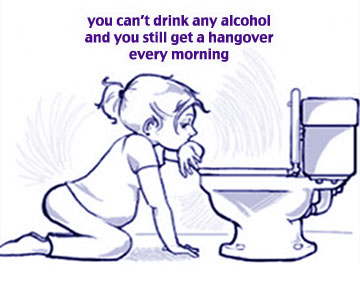

    It’s best to avoid fluids at meal time. Drink small amounts of fluids primarily in between meals instead. Don’t drink so much at once that your stomach feels full, as that will make you less hungry for food, although make sure you get plenty of water throughout the day to keep yourself well-hydrated, especially if you are vomiting. Sometimes drinks at cold temperatures help curb nausea better than hot drinks. Fruit juices, Gatorade and popsicles are helpful, as well as sucking on ice chips (an ice pack on your forehead might even help!) Keep caffeine intake to a minimum as it can make you feel worse, contribute to dehydration and further irritate nausea.

    Many pregnant women crave sour or bitter tastes like lemon, which may have a therapeutic effect and can calm your system. Drinking lemonade or lemon water, smelling lemons, or just a small taste of lemon will normally calm an upset stomach. You can put slices of lemon in your iced tea, sparkling water or even simply suck on a lemon wedge.

    Drinking decaffeinated herbal teas (be careful, some herbal teas may be harmful during pregnancy) may help relieve morning sickness. Teas like peppermint, mint, chamomile, red raspberry leaf and ginger can be calming in reasonable and small doses. Ginger is thought to settle the stomach and help relieve queasiness. Ginger ale (made with real ginger), ginger tea (grated fresh into hot water), ginger candies, dried ginger and ginger cookies may all help relieve nausea. Powdered ginger root capsules are another option. It is always advisable to speak to your doctor or midwife first before taking any herbs.

    Sometimes, iron can be hard on your digestive system and become bothersome during pregnancy. Avoid extra iron supplements, especially in your first trimester, unless you are anemic. If you think your morning sickness may be related to your prenatal vitamins, talk to your doctor or midwife. They may switch you to a prenatal vitamin with a lower dose of iron for the first trimester. You might find that taking your prenatal vitamins later in the day, rather than in the morning may help. Also, taking them with food, possibly with dinner may be best, if they cause your stomach to be upset. Never stop taking your prenatal vitamin supplement, unless you’re advised by your doctor to do so.

    Vitamin B6 eases nausea in some women and can be helpful in low doses. Increase vitamin B6 in your diet by eating whole grains, nuts, seeds, and legumes. Talk to your doctor or midwife about possibly taking a vitamin B6 supplement, because he or she can tell you how much to take and whether or not the amount in your prenatal vitamin should count as one of the doses. (The amount of vitamin B6 in supplements varies by brand.) Sometimes a combination of Vitamin B6 and Unisom are even more helpful in easing morning sickness. Never take any extra vitamin supplement without your doctor’s approval.

    More Articles on Morning Sickness

    Morning Sickness
    Morning Sickness Remedies
    Morning Sickness Help
    Morning Sickness Alternatives

  • Morning Sickness Help

    Morning sickness is usually connected to the sight, taste and smell of certain foods and other irritants such as cigarette smoke. It’s best to avoid strong odors, by keeping rooms well-ventilated and staying clear of second-hand smoke. Surround yourself with pleasant scents. It may help to keep air freshener handy to combat unpleasant odors. Certain toothpastes can increase queasiness, so try and find one that you can handle.

    Fatigue tends to aggravate morning sickness and makes it worse. Rest as much as possible and take cat naps during the day, if you can. Try to lie down when nausea strikes and make sure you’re getting plenty of sleep. Rushing tends to aggravate nausea. Don’t get out of bed quickly, instead stand up slowly and keep morning activities slow and calm.

    Some researchers theorize that stress and emotions may also play a role in morning sickness. Try to minimize stress as much as possible, by giving yourself time to relax. Watching a movie, visiting with a friend, talking to another mom-to-be are all good stress-relievers.

    Other things you can try include: medications, acupressure, acupuncture and dietary strategies.

    More Articles on Morning Sickness

    Morning Sickness
    Morning Sickness Remedies
    Diet and Morning Sickness
    Morning Sickness Alternatives

  • Morning Sickness

    Morning Sickness

    Nausea and morning sickness is common in early pregnancy, typically beginning about 3-4 weeks after conception and diminishing later in pregnancy, usually by the start of the second trimester. Some women continue to experience morning sickness well into their second trimester and even beyond. Despite its common name, morning sickness can occur at any time of the day, although it tends to be the worst early in the day.

    Morning sickness has long been believed to be a sign of a healthy pregnancy and is linked to a lower miscarriage rate. There is some evidence that pregnancies affected by morning sickness do better than pregnancies in which there is no nausea at all. As you?re hunched over the toilet bowl, you can cling to that knowledge and maybe it will make you feel a little better.

    The cause of the nausea and vomiting during pregnancy remains unknown, although it appears to be related to the production of pregnancy hormones, particularly HCG (human chorionic gonadotrophin) and also high levels of estrogen. Other possible causes include fluctuations in blood pressure, rapid lowering of blood sugar levels, carrying multiple babies, emotional stress, an enhanced sense of smell, excess acid in the stomach and a high-fat diet.

    In most cases, morning sickness won?t harm you or your unborn baby. However, morning sickness can become more of a problem if you can’t keep any food or fluids down and begin to lose a lot of weight. Should your vomiting become severe, you should notify your doctor or midwife if you are unable to keep anything down for 24 hours. This degree of vomiting may require IV hydration. The most severe morning sickness is called hyperemesis gravidarum, which sometimes requires hospitalization.

    Women that experience morning sickness are likely very interested in finding ways to cope with it and minimize the nausea. There is no single guaranteed remedy for morning sickness, but there are a few things you can try.

    More Articles on Morning Sickness

  • Adoption Options

    Adoption Options

    There are technically three basic adoption options for birthmothers to choose from: confidential (or closed) adoption, mediated (or semi-open) adoption and fully disclosed (or open) adoption. These options are categorized by the different degrees of openness achieved, as well as the amount of information exchanged between the birthparents and the adoptive parents. Many birthmothers like the freedom of being able to choose one of these adoption options because it gives them more flexibility and control over their situation. The decision is completely the birthmother’s to make, depending on which option she is the most comfortable with. No matter which option the birthmother chooses, it’s important to remember that all varieties of adoption- whether closed, semi-open or open- are permanent.

    Closed Adoption

    A closed adoption refers to a confidential adoption process where the identities of the birthparents and the adoptive parents may not be shared. No identifying information such as names, addresses or phone numbers is exchanged between families, but limited non-identifying information such as physical characteristics and medical history may be provided to both parties. There is no contact between the birthparents and the adoptive parents before or after placement and no on-going information of the child is shared. In a closed adoption, the birthmother generally doesn’t choose the adoptive parents and relies on the experience of the adoption professional to select the best adoptive parents.

    Semi-open Adoption

    A semi-open adoption refers to an adoption process where some limited identifying information may be shared between the birthparents and the adoptive parents, such as first names, possibly pictures and letters following the birth and sometimes gifts. Information is usually shared through a mediator (adoption agency personnel or attorney) rather than direct contact between the two parties. Sometimes, birthparents and adoptive parents may meet face-to-face, usually before the delivery or at the hospital. There is no direct contact after placement. Semi-open adoption makes it possible for the birthmother to play an active role in choosing the adoptive parents.

    Open Adoption

    An open adoption refers to an adoption process where full disclosure of identifying information between the birthparents and the adoptive parents are shared and there are no limits placed on how much can be exchanged, as long as it is mutually agreed upon. In open adoption, the birthmother can select the adoptive parents from a group of screened families. Many times, the two parties have direct contact and develop a trusting relationship. The birthparents and adoptive parents may communicate with each other by telephone calls, letters and are often encouraged to meet in person. On-going contact may occur after placement including letters, photographs, e-mails, phone calls and sometimes even actual visits. Adoption professionals generally moderate the degree of openness between the two parties, based upon their mutual wishes and what works for them. The level of openness should be decided on a case-by-case basis and the birthparents need to understand that both parties must agree on the level of on-going communication between them post-placement, although the agreement isn’t legally binding.

  • Pregnant Moms Flash Mob

    Pregnant Moms Flash Mob

    In this awesome flash mob video filmed at Kings Island Amusement Park, pregnant moms come together to dance to Justin Bieber’s hit song, “Baby.” However entertaining this is to watch, there was another reason many watched. “March of Dimes” received $.10 for each time this video was viewed. Enjoy!

  • Your Pregnancy Week by Week

    pregnancy week by week
    It is important that you know how your pregnancy is going which is why we put our pregnancy week by week guide together for our readers. Find sections broken down for baby and expectant mom. If you think you may be pregnant, take an extra dose of folic acid as it can help prevent birth defects.

    Take a look at what you are eating and focus on your nutrition as a pregnancy takes a lot out of you. What you eat does help your baby grow. So it only makes sense to eat healthy to keep your baby healthy. You are eating for two and although you should not double your food intake or calories, you should add 300 calories into your diet after the third month of pregnancy.

    Start reducing caffeine if you are a coffee drinker or soda pop junkie as soon as you realize you are pregnant. In fact, reducing caffeine before you plan to get pregnant is even better for your baby.  Many start prenatal vitamins to get their body ready to make the body stronger for pregnancy.

    Pregnancy Week by Week

    Find symptoms, fetal development and body changes in pregnancy, broken down by week.

    Week 1 .::. Week 2 .::. Week 3 .::. Week 4 .::. Week 5
    Week 6 .::. Week 7 .::. Week 8 .::. Week 9 .::. Week 10
    Week 11 .::. Week 12 .::. Week 13 .::. Week 14 .::. Week 15
    Week 16 .::. Week 17 .::. Week 18 .::. Week 19 .::. Week 20
    Week 21 .::. Week 22 .::. Week 23 .::. Week 24 .::. Week 25
    Week 26 .::. Week 27 .::. Week 28 .::. Week 29 .::. Week 30
    Week 31 .::. Week 32 .::. Week 33 .::. Week 34 .::. Week 35
    Week 36 .::. Week 37 .::. Week 38 .::. Week 39 .::. Week 40

  • Early Pregnancy Symptoms

    Pregnancy Symptoms can be confusing at times since tender breasts can indicate early pregnancy. It can also be a sign of an expected menstrual period. A missed period is usually an early sign of pregnancy, but can also be skipped after a stressful time in one’s life. Putting symptoms together and taking a home pregnancy test can help to put this confusion to rest.

    Missed Menstrual Period

    One of the first pregnancy symptoms is usually a missed or late menstrual period and is the first indicator that a woman is pregnant, although some women claim to know they are pregnant before they miss a period.

    Tender Breasts

    Tender swollen breasts are another one of the early symptoms. While tender breasts are a symptom of an impending menstrual period, enlarged breasts are not. Sore and swollen breasts with a tingling sensation can be an early indicator that a woman is pregnant.

    Nausea and Morning Sickness

    Nausea associated with morning sickness can be a tell tell sign that a woman is pregnant. Many women suggest that they’ve had nausea up to two weeks before an expected menstrual period and before any other symptom. Eating crackers before getting out of the bed in the morning can help with morning sickness and eating several smaller meals instead of larger meals can help with nausea related to morning sickness.

    Fatigue in Pregnancy

    Extreme fatigue can be another indicator of pregnancy, especially if other symptoms are present. One or two naps per day can help a pregnant woman maintain normal daily activities.

    Frequent Urination

    Frequent urination in pregnancy usually occurs between 6 to 8 weeks after conception.

    Read next five Early Pregnancy Symptoms

    << more complete Pregnancy Symptoms Guide >>
    << Pregnancy Symptoms Calendar >>

  • Pregnancy Due Date Calculator

    If you’re in need of an ovulation predictor or pregnancy due date calculator, we’ve got you covered. Just enter the date of your last menstrual period to calculate either. A baby can be born within two weeks on either side of the due date to be considered on time.

    Please select the first day of your last menstrual period:

    Usual number of days in your cycle: