Blog

  • Statistics on Teen Pregnancy

    Statistics on Teen Pregnancy

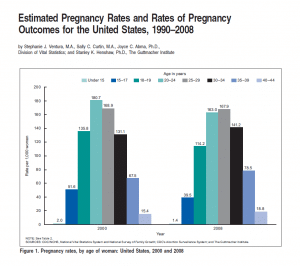
    Teen-Pregnancy-RatesTeen birth rates, teen pregnancy rates and teen abortion rates are down, while fewer teens report that they are sexually active. These lows in the teen birth rates are seen in every age group and among teens of every racial and ethnic group but these declines hold more strongly in some parts of the country than in others. Despite this progress, about 17% of current 15-year-old girls will give birth before their 20th birthday, and 1 in 5 teen births are repeat teen births.

    In 2003, the birth rate for teens between the ages of 15 and 19 was about 41 births for every 1,000 teens, representing a 33% decline from about 62 for every 1,000 teens in 1991. Birth rates also continue to show wide geographic variations. New Hampshire remains the state with the lowest teen birth rate in the US with 20 per 1,000 teens between the ages of 15 and 19. Mississippi remains the state with the highest teen birth rate with 65 births for every 1,000 teens between the ages of 15 and 19.

    The proportions of teen pregnancies that end in abortion have dropped dramatically also. In the mid- 1980s, about 40% of all teen pregnancies ended in abortion, while 29% of teen pregnancies in 2000, ended in abortion. However, there are significant state variations, with abortion rates in 2000 at 11% in Kentucky, while New Jersey’s was the highest at 53%.

    Births to very young mothers are associated with increased health risks to the mother. These mothers had the lowest levels of timely prenatal care, about 47%, in the first trimester, in contrast to the overall rate of about 83%. About 16% of them received late or no prenatal, compared to an overall rate of 3.8%. They were also at a higher risk for pregnancy-associated hypertension, 5.3%, being over 40% higher than that experienced by all mothers, which was 3.7%.
    more on teen pregnancy:

    Teen Pregnancy
    Teen Options

  • Third Stage of Delivery

    Third Stage of Delivery

    third-stageAfter your baby is born and the cord has been clamped and cut, you’re still not quite done, although the worse it over with. During the third (and last) stage of labor, your much milder contractions will continue to help your uterus to loosen the placenta from your uterine wall. Your uterus will then expel and deliver the placenta and membranes that have nourished your baby throughout your pregnancy. This is also called the “afterbirth”. This little organ weighs about one pound!

    Delivery of the Placenta

    You may even be asked to push one last time for this to happen and may feel a small gush of blood. Sometimes, your doctor, midwife or nurse may massage your lower abdomen to encourage your uterus to contract more to help expel the placenta. Occasionally, the doctor or midwife may pull the umbilical cord slightly with one hand, while pressing down gently on the top of your uterus.

    Delivery of the placenta happens generally within about 5-30 minutes of your baby’s delivery. After the placenta slips out, your uterus will continue to contract, shrink and become firm, as a natural way to prevent further bleeding. Your doctor or midwife will examine the placenta to make sure it’s intact and any remaining fragments left inside your uterus must be removed to prevent bleeding, infection and possible hemorrhage. Over the next several hours, a nurse will check your uterus to make sure it’s firming up and that you’re not experiencing heavier-than-normal bleeding.

    You may tremble and have chills at this point, or may become hungry or thirsty. You probably will feel a great sense of relief, but will likely be completely exhausted as well. Your doctor or midwife will examine your vagina and perineum, repairing any tears that may have occurred and stitching episiotomy (if you had one). You will receive a local anesthetic (if you are not numb already), to help make the repairs fairly painless. You may be offered cold compresses to apply to ease discomfort and reduce swelling. Your bleeding will be heavy, like a menstrual flow and is often called, “lochia”.

    You may want your baby to be placed on your chest as soon as possible, to begin bonding and spending time together. You may try breastfeeding your new little one at this time, which can also help tighten your uterus and decrease bleeding, because breastfeeding releases oxytocin. Congratulations! Now you’re on to the next stage: the rewarding stage of motherhood!

    More on Labor and Delivery

    Signs of Labor
    Preterm Labor
    Preterm Complications
    Preterm Labor Causes
    Preterm Prevention and Treatment
    First Stage: Phase I
    First Stage: Phase II
    First Stage: Phase III
    Second Stage
    Third Stage
    Induction of Labor
    Induction of Labor Procedures
    Labor Induction Risks
    Do It Yourself Labor Induction

  • Triple Screen Test

    Triple Screen Test

    control blood in a laboratoryThis test is another method of screening maternal blood to detect spinal defects and chromosone abnormalities, especially Down syndrome. This test goes beyond alpha-fetoprotein testing and consists of one blood sample taken between the 15th and 20th week of pregnancy to analyze three substances: MSAFP, Human Chorionic gonadutropin (HCG) and estriol. The levels of these three substances in your blood may indicate the presence of Down syndrome.

    The triple screen test is used to indicate whether your baby is at higher risk for having a neural tube defect, Down syndrome, along with other rare conditions. In other words, an abnormal test result does not necessarily mean your baby will have a birth defect. Although abnormally high levels of AFP are sure to cause concern, the great majority of pregnant women with high AFP levels have nothing wrong. There are many other causes of elevated levels of AFP, including a pregnancy which is not dated correctly (if you are actually farther along than estimated, then AFP levels will be higher than expected), if you are carrying twins, or if the initial interpretation of your test results didn’t consider your weight, race or the presence of diabetes- all of which also affect AFP levels.

    It usually takes less than three days to get the results from the triple screen test, depending on the lab performing the tests. Ask your doctor when you can expect to hear the results.

    More Tests

    Amniocentesis

    Chorionic Villus Sampling (CVS)

    Contraction Stress test (CST)

    Glucose Tolerance Testing

    Hemoglobin Test
    MSAFPT Test

    Non-Stress (NST) Test

    Rh Factor

    Triple Screen Test

    Ultrasound

  • Ultrasound – Prenatal Test

    Ultrasound – Prenatal Test

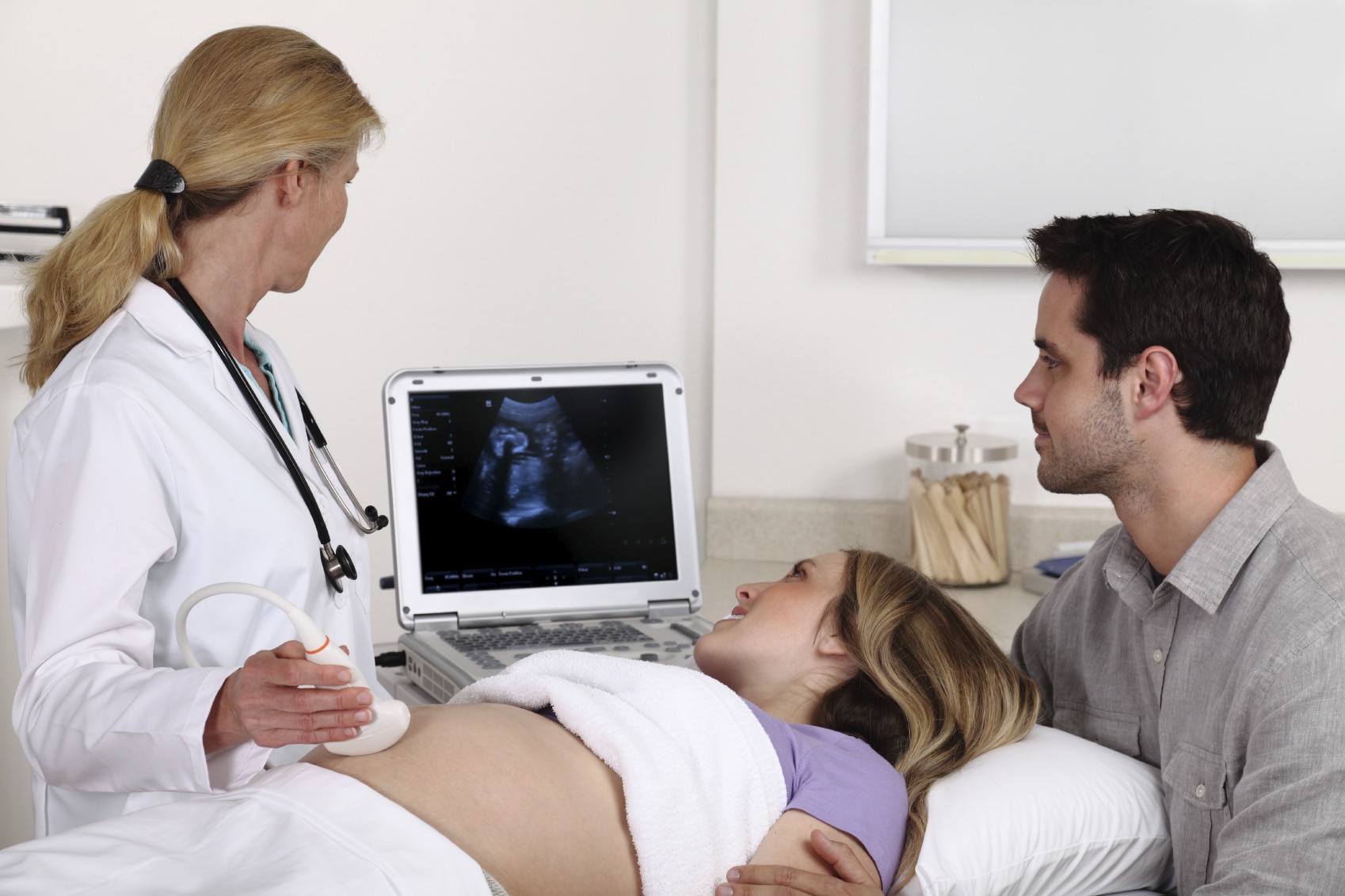
    ultrasoundAn ultrasound (or sonogram) is a non-surgical method of getting a picture of your baby. Ultrasound involves the use of high-frequency sound waves. The sound waves are directed into your uterus with a small plastic device called a transducer. The sound waved reflect off of bones and tissues and are then converted into black and white images on a screen.

    An ultrasound can be done at any time during pregnancy and may be repeated at different stages to monitor your baby’s growth and development if there is cause for concern. An advanced-level (level two) ultrasound is offered only when a problem is suspected. Usually, ultrasounds are offered between the 16th and 20th weeks of pregnancy. By that time, major structural abnormalities can be diagnosed and all four chambers of the heart can be seen (making it possible to detect some congenital heart defects.) A fetal heart can be seen beating as early as 5 or 6 weeks into your pregnancy.

    Ultrasound is one of the most valuable methods of evaluating the development of your baby and placenta. Ultrasounds are usually performed: to confirm pregnancy (or detect miscarriage), date the pregnancy (an ultrasound exam is extremely accurate for judging the fetal age before 20 weeks), learn the number of babies, evaluate risks to the pregnancy (such as implantation location of the embryo in an abnormal location), examine the baby for structural malformations, determine the location and development of the placenta, evaluate the growth and development of the baby and asses health of the baby by monitoring movements.

    Trans-vaginal ultrasounds are sometimes preferred for investigating pregnancy complications during the first trimester. For this test, a small transducer is inserted in the vagina up to the entrance of the uterus to create images of the baby on the monitor. This can be used in early pregnancy for a better view of the baby and placenta.

    More Tests

    Amniocentesis
    Chorionic Villus Sampling (CVS)
    Contraction Stress test (CST)
    Glucose Tolerance Testing
    Hemoglobin Test
    MSAFPT Test
    Non-Stress (NST) Test
    Rh Factor
    Triple Screen Test
    Ultrasound

  • Varicose Veins

    Varicose Veins

    varicose veinsWhen your blood volume and hormone levels increase with pregnancy and blood vessels in your legs become engorged, you may experience varicose veins. Your enlarged uterus tends to press against major veins in your pelvic region, adding to the problem. In addition, varicose veins run in families, so if your mother got them, you may predisposed to get them also.

    Varicose Veins Symptoms

    The symptoms of varicose veins includes pain, tenderness and aching in your legs, along with possible swelling of your ankles. Sometimes varicose veins cause no discomfort at all. Visibly, they can appear as bluish enlarged, bulging veins and can be somewhat rope-like. To prevent or minimize them, limit your standing time and rest as often as possible, with your feet elevated. Try to keep from crossing your legs and wear clothing that is loose, rather than clothes that can restrict circulation in your legs. The good news is varicose veins usually disappear within three months of delivery.

    more Discomforts

    Backaches
    Breast Discomfort
    Braxton Hicks Contractions
    Constipation
    Dizziness and Fainting
    Fatigue
    Hand Numbness
    Headaches
    Heartburn and Indigestion
    Hemorrhoids
    Increased Discharge
    Itchy Abdomen
    Leg Cramps
    Nausea and Morning Sickness
    Overheating
    Pelvic Pressure
    Sleep Trouble
    Swelling
    Urinary Problems
    Varicose Veins

  • Urinary Problems

    When your uterus puts pressure on your bladder, as it grows (also when your baby drops, close to delivery), you may experience mild incontinence and frequent urination or urinary problems. Read more of the article below:

    Urinary problems are common, especially in the third trimester, to have trouble with leaking small amounts of urine when you sneeze or cough, often referred to as “stress incontinence”.

    By doing Kegel exercises, you can tighten and tone the muscles in your pelvis, which can help control incontinence. Wearing a panty liner or sanitary pad may make you feel more comfortable. By avoiding fluids right before bedtime can reduce your bathroom trips during the night, although make sure you are getting the recommended eight 8-ounce glasses of water during the day.

    more Discomforts

    Backaches
    Breast Discomfort
    Braxton Hicks Contractions
    Constipation
    Dizziness and Fainting
    Fatigue
    Hand Numbness
    Headaches
    Heartburn and Indigestion
    Hemorrhoids
    Increased Discharge
    Itchy Abdomen
    Leg Cramps
    Nausea and Morning Sickness
    Overheating
    Pelvic Pressure
    Sleep Trouble
    Swelling
    Urinary Problems
    Varicose Veins

  • Disclaimer

    All material provided by PregnancyLounge is for information and entertainment purposes only and is not a substitute for medical advice and /or treatment. Consult your physician for information specific to your individual needs. If you are pregnant or if there is the possibility that you are pregnant, it is important that you get the advice from your physician before taking medications or supplements.

  • 6 Pregnancy Tips for 2015

    6 Pregnancy Tips for 2015

    skinGood advice is hard to come by as what’s considered good advice today may not be considered good years later.  Take for example, Teflon, the biggest craze in the 70’s due to the non-sticking nature of the coating, replaced most all coating .  Today, Teflon is looked down upon by some who say it is linked to cancer, thyroid disease, ulcerative colitis, and high cholesterol.  That wonderful product that was raved about is now something to stay away from. That said, we’ve gathered a few things on a list for the expectant mom that are considered good tips for 2014!

    Pregnancy Tip 1Exercise is good in pregnancy and can lower the risk of miscarriage, so that’s really good news.  It is said to reduce complications when in labor and even reduce the time of your labor, but don’t overdo it.

    Pregnancy Tip 2Start taking prenatal vitamins before you’re pregnant.  Prenatal vitamins help nail and hair health even when not pregnant.  I take them and I’m not expecting.  In fact, some recommend prenatal vitamins after cancer treatments to help hair return faster and healthier.  There you have it! I get mine from Walmart because they are cheaper at just $8 a pop. Check with your doctor for a prenatal vitamin suggestions.

    Pregnancy Tip 3When cleaning around the house, opt for organic or natural cleaners instead of harsh ones or those full of chemicals and toxic ingredients.  If you must use a chemical cleaner, be sure to wear rubber gloves as the toxins can penetrate your skin and enter the bloodstream and reach your baby. We found a great natural cleaner tips at Mother Earth News that seems perfect for an expectant mother.

    Pregnancy Tip 4If you have a cat, don’t change your cat litter. Have someone else do it for you. Coming into contact with the feces or urine of a cat may infect you with toxoplasmosis.  One more chore off your list!  From Wikipedia, “Toxoplasmosis is a parasitic disease caused by the protozoan Toxoplasma gondii.[1] The parasite infects most genera of warm-blooded animals, including humans, but the primary host is the felid (cat) family. ”

    Pregnancy Tip 5Do leg and foot stretches before heading to bed.  I still remember the pain of waking up in the middle of the night with a horrible foot cramp that my husband could only fix if he grabbed my foot and pulled it up toward me.  I didn’t know that you’re supposed to stretch before bedtime.

    Pregnancy Tip 6Lastly, be prepared to order a dinner while out and by the time the plate comes out from the kitchen, you’ve decided you want your husband’s meal instead.  The funny thing is, I could never get away with this when not pregnant.  But when pregnant, my husband would gladly give in knowing there was absolutely no rhyme or reason to it, nor could I change that craving.



  • Frozen Berries Recalled Due to Hepatitis A

    Frozen Berries Recalled Due to Hepatitis A

    frozen-berriesIf you are pregnant and shop at Costco or Harris Teeter, check your  freezer for frozen fruit. DO NOT eat the frozen mixed berries called, “Organic Antioxidant Blend.” Townsend Farms has issued a recall of it’s product due to an outbreak of Hepatitis A that is linked to the frozen fruit.

    Five states have had at least 34 Hepatitis A infections, Arizona, Nevada, California, Colorado and New Mexico.

    Although rare, a baby can get Hepatitis A from it’s infected mother and it can affect the baby’s liver and can cause pregnancy complications such as a premature birth.

    Symptoms of Hepatitis A include jaundice or yellowing of the skin, dark urine, fatigue, and pale looking stool. If you suspect you have been exposed to Hepatitis A, a liver function test can make a positive diagnosis.

    It can take as long as 50 days after exposure from an infected person or as little as 15 days to contract the illness.

    If you think you have been around someone with Hepatitis A, contact your physician immediately since complications can occur in pregnancy, although unlikely. Still it’s better to be safe than sorry.

    Cathy Wilson, a 58-year old San Diego resident, has filed suit against Costco and Townsend Farms, according to legal documents. She said that she had been eating the frozen berries four times a week and had purchased them at Costco.

    Wilson said she’s tired all the time, shaky and hasn’t been able to work for a month. What makes things even more difficult is the fact that she is the caregiver for her elderly mother who has Altheimer’s and is afraid that she has been afraid that her illnesses will make her mother sick and that she has purposely stayed away.  She says that she is now too weak to even drive.

    This is the second case Wilson’s attorney has filed in the frozen berries case.

    UPDATE:  Seven states are now reporting Hepatitis A illnesses from “Organic Antioxidant Blend”.  Those states are; California, Colorado, Arizona, Hawaii, New Mexico, Nevada and Utah

  • Celebrity Pregnancy Rumors – Is Beyonce Pregnant

    Celebrity Pregnancy Rumors – Is Beyonce Pregnant

    pregnancy-beyonceAlthought several sources close to Beyonce’  had released statements saying that the singer and husband Jay-Z are indeed expecting another baby, it is not true.

    Several tabloids have been reporting the news since last week that the power couple are expecting, but Beyonce and Jay-Z had remained tight-lipped about their ever-growing family.  These rumors aren’t really all that unusual since Beyonce has been pregnant every other month for years according to the tabloids. Shouldn’t she have given birth to several children by now?

    Beyonce isn’t the only one prone to pregnancy rumors, repeatedly. I don’t know how many times I’ve read that Jennifer Aniston was pregnant.  In fact, she did a comedic pretend pregnancy commercial for Smart Water where she was expecting triplets.  I can’t imagine it but expect those reports to increase given her upcoming marriage to Justin Theroux which may be on hold given Brad Pitt and Angelina Jolie are said to be planning to tie the knot this summer.

    Speaking of Angelina. She has also had her fair share of pregnancy rumors. Seems I read one not that long ago.  It’s kind of hard to be pregnant and go through breast surgery and reconstruction.  Don’t you think?

    Brad and Angelina said that they will marry sooner rather than later since their children keep asking them for a wedding date. No date has been announced as of yet since Brad is in the process of filming “World War Z “and his schedule is crazy right right now.

    The couple got engaged in 2012 after Brad gave Angelina a $500,000 engagement ring. Now that’s a ring! Again, at that time they said their wedding would be soon.  I expect an announcement will be pretty soon.  Seems they are in the news a bunch right now.  They are on a roll.

    Update:  They did it!  Brad and Angelina finally tied the knot.

  • McDonald’s to Serve Breakfast All Day

    McDonald’s to Serve Breakfast All Day

    mcdonaldsWord has it that McDonald’s plans to offer all day breakfast foods to customers.

    Bob Thompson, McDonald’s CEO has issued a statement that the chain may offer Egg McMuffins at any hour and that they are also looking at the possibility of providing food delivery in the near future.

    As sales remain stagnant, the fast food giant is looking for ways to stir up more sales.  The company has been hinting for some time that they might be considering offering Egg McMuffins, Hotcakes and McGriddles to late night customers.  Although McDonald’s has not officially made a statement concerning the menu change as to when it may happen, it looks like an all day breakfast is in the works.

    Since I only eat breakfast at McDonalds, this may just help in my opinion.  In fact, during all of my pregnancies, I had to have McDonald’s breakfast in some form to help with morning sickness.  If I had to prepare it, I didn’t want it.  This seems like a good move.

  • Mom Faces Possible Jail Time for Leaving Baby in Car

    Mom Faces Possible Jail Time for Leaving Baby in Car

    baby-carseatCHULA VISTA – A 4 month old baby almost didn’t make it and was unconscious when a maintenance worker found her in a car left alone by her 25 year old mother, Starley Cristal Geart.  This little one was heavily sweating and would not respond to pinching or loud noises but was breathing.  Temperatures outside were in the high 70’s – low 80’s that day but temps in the car would have been much higher.

    Geart has two children other than her baby, Kaylahni.  All of whom were taken from her when this incident happened.  In October, her children were returned.  She faces one count of child endangerment and an allegation of great bodily injury to her child.

    Chula Vista Superior Court Judge Edward P. Allard III determined that the evidence was sufficient for Geart to stand trial.  If convicted, she faces a possible sentence of up to 12 years in prison.

    In my opinion, I don’t think this young mom knew not to leave her child in a car when it’s in the 70’s.  It wasn’t that long ago that a dad forgot to drop his child off at daycare and went into work only to come out later to find the child not breathing.  The heartache this family must have gone through.

    Since Spring is here and the temps will only be going up, we wanted to remind parents to never leave a baby or child in a car, even for a short time.  During the summer months, the temperature inside a parked car can reach over 120 degrees in as little as 10 minutes.

    While this incident took place last summer, this story isn’t unique.  Every year many children lose their lives after being left in hot cars.  We must be diligent in getting this message out to those parents who are unaware of the danger.

    This baby was unconscious and OK now but if left much longer, it would have been a very very sad ending.