Author: PL Team

  • Teen Pregnancy

    Teen Pregnancy

    teen-pregnancyPregnancy is one of the most difficult and stressful experiences a teen might ever face. If you are a teen facing an unplanned pregnancy, you are not alone. Millions of other teens have gone through (and survived!) the same thing and most of those pregnancies were unplanned also. You may have been surprised when you found out or even hoped it wasn’t true. One of the first thoughts that may come to mind is that your life is over, fortunately, that isn’t so. Before you freak out, take a deep breath and just remember you are in charge of your life. There are many resources available to you.

    Feeling ashamed, confused, overwhelmed, sad, scared and a little excited at the same time are all natural reactions at this point. You may be wondering how to break the news to your parents, what your friends’ reactions will be, as well as what effects this pregnancy might have on your relationship with your baby’s father. You may also be curious to know how your life will change, what you can do to have a healthy baby and what it takes to become a good mom. It will take a while to adjust to the fact that you’re going to have a baby, since it’s a huge change. It’s completely natural for you to wonder whether you’re ready to handle the responsibilities that come with motherhood.

    You may want to know where you should go for help. It’s important to talk to people who can support you and help you sort through your feelings and options. You can go to your family, a trusted friend, your pastor or even a school counselor or nurse, depending on your situation. Sharing the news of your pregnancy can be one of the most difficult conversations to have, but you might be amazed by the support of your parents and friends.

    Take good care of yourself so that you and your baby will be healthy. You need to see a doctor or gynecologist (OB/GYN) as soon as possible to begin getting prenatal care. Your doctor will prescribe prenatal vitamins for you (or recommend an over-the-counter brand), which help ensure your health as well as prevent some types of birth defects in your baby. If you get the proper prenatal care early in your pregnancy and make the right choices, you have a very good chance of preventing health problems for your baby, as well as yourself.

    Read more on teen pregnancy:

    Teen Pregnancy (continued)
    Teen Statistics
    Teen Options

  • Cervix, Changes and BBT

    Cervix, Changes and BBT

    bbt basal body temperatureA combination of charting your basal body temperature (BBT), cervical mucus and cervical position and shape will indicate when the most fertile time of your cycle is. Cervical change signals general fluctuations in your estrogen levels and can be very helpful and fairly reliable in predicting your fertility. Checking your cervical position and shape takes some practice. Also, to chart this particular sign, there are some guidelines you should follow to achieve the best results.

    Your Cervical Changes and Shape

    Right after your period ends, the position of your cervix is low, hard and closed. At this point in your cycle, it should be easily reached by your fingertip and feel as if you are touching the tip of your nose. A firm, pointed shape generally indicates low estrogen and you are considered to be infertile during this time.

    As estrogen and fertility increase (immediately prior to ovulation), your cervix softens, opens up and rises to it?s highest point within your body so that it?s harder to reach. The opening increases as well, which makes the slit or tiny hole feel much larger, becoming more receptive to sperm, allowing them to make their way more easily through your cervix. Your cervix remains this way until after ovulation has taken place.

    Once ovulation has occurred- when estrogen levels suddenly drop, you can feel your hardened, closed cervix back in its lower (pre-ovulatory) position. Keep in mind that women who have given birth previously may notice that their cervix feels slightly open, even after ovulation. When the position of your cervix drops, it will become easy to reach once more. At this point, you are considered infertile once again and cannot get pregnant.

    You should begin observing your cervical position and shape the first day after your period ends. Cervical position can be monitored throughout the day and be done while checking your cervical mucus. Before checking your cervix, be sure to wash your hands thoroughly. The best time to check it is right after you have showered. Sitting on the toilet or with one foot on the toilet seat (or bathtub) may be the most comfortable positions for checking your cervix. You can check your cervical position by gently inserting your finger and feeling for your cervix, which is located at the top of your vagina. Record if it?s hard to reach (high position) or easier to reach (low position) and also if it feels firm or soft. It normally takes a few months to see all the changes in your cervix during your cycle and notice a pattern.

    –Tracking your basal body temperature (or BBT)
    –Observing changes in your cervical mucus
    –Monitoring your physical and emotional symptoms
    –Checking the position and shape of your cervix

    Read more on Fertility Charting

  • Pregnancy Travel

    Pregnancy Travel

    pregnancy travelIf you’re going through pregnancy, you may be wondering if it’s safe for you to travel & also what extra precautions you should take during your time away. If you are in good health and you’ve already spoken with your doctor or midwife about possible risks and potential problems that may arise (especially if planning to travel abroad), the decision is all yours.  Pregnancy travel — this may be the last time you’ll have a chance to get away with your partner for a while; just the two of you.

    The safest time for a woman to travel during pregnancy is in the second trimester, preferably month 4 through month 6; when there is the least risk of miscarriage (which would more likely happen prior to 12 weeks) and premature labor (which would be more likely after 28 weeks). Plus, during the second trimester, morning sickness has typically let up; allowing you to feel better and in addition, you are not big enough yet to feel too uncomfortable being out-and-about. Also, check with the airline as some have specific restrictions for pregnant women.

    more on Travel in Pregnancy

    International Travel When Pregnant

  • Average Basal Body Temperature BBT

    Average Basal Body Temperature BBT

    chartCharting your BBT allows you to confirm the onset of ovulation, making it a very useful method in helping to plan the timing of intercourse that will lead to conception. By keeping track of your BBT, you can also gain an understanding of the general patterns of your menstrual cycle. After recording your temperature on a chart for a few months, you can begin to notice a distinct pattern of temperature fluctuations in your monthly cycle, which will help you to predict your most fertile days in the future.

    Your temperature in the morning, right after you wake up, is low between your period and ovulation. Around the time of ovulation, your temperature rises and remains high for about two weeks until your next period. This temperature rise will let you know that ovulation has occurred. But remember charting your BBT tells you when you have ovulated after it has happened, so you should also look for other fertility signs, such as observing your cervical mucus, which changes several days before ovulation.

    Your BBT is directly related to your levels of estrogen and progesterone. The presence of the hormone estrogen helps cause the low temperature before ovulation. On average, your BBT will range from 97.0-98.2 degrees Fahrenheit, prior to ovulation, although it can vary slightly one way or the other. Sometimes, your temperature may actually take a dip the day of ovulation, but this doesn’t always happen.

    Higher temperatures reflect the higher levels of the hormone progesterone in your system, which is secreted after ovulation. Typically, it will rise at least 0.4 to 0.6 degrees- jumping up to 98.0-98.6 degrees and beyond, although there is a wide range of “normal” temperatures. Your temperature will remain higher until the end of your cycle, when your progesterone levels begin to drop. Your period often begins within a day or two following the decline in progesterone.

    If your temperature stays high for 17 days in a row and you don’t have your period, it could be an early indication of pregnancy. Pregnancy causes your temperature to remain high beyond the typical 14 days after ovulation, so an elevated temperature past the expected date of your period can mean you’re pregnant (unless of course you have a fever).

    You can find a reliable basal thermometer at practically any drugstore and they are inexpensive. Basal thermometers are more accurate than regular fever thermometers and are ultra-sensitive, tracking your body’s slightest temperature shift. Digital thermometers are best, because they are quicker and you don’t have to shake them down.

    When charting your basal body temperature it’s important that you take your temperature first thing in the morning, before you get out of bed. For your temperature reading to be accurate, you must take it before you do anything: before standing, going to the bathroom or brushing your teeth. It’s easiest just to keep your thermometer next to your bed, within easy reach. Also, for best results, try to take your temperature as close as possible to the same time everyday and after at least 4 hours of continuous sleep, otherwise it will be slightly different.

    Taking your temperature at an unusual time, going to bed late, illness, fever, stress, drinking alcohol, exercise, using an electric blanket or heating pad can all affect your basal body temperature, causing it to be higher than normal. Also, some fertility medications, such as Clomid can cause elevated temperatures and make charting less accurate.

  • Pregnancy Stretch Marks and Skin

    Pregnancy Stretch Marks and Skin

    In pregnancy, your skin may begin to change right before your eyes. These changes are a very common and usually an expected part of pregnancy, although not every woman will experience all the same skin changes. Most skin changes during pregnancy can be blamed on the effects of various hormones. These ever-fluctuating pregnancy hormones can do some strange things to your skin, but most changes are not permanent and they tend to disappear within a few months after you give birth, although they generally come back in subsequent pregnancies. Except for affecting your appearance cosmetically, most common skin changes don’t harm you or your unborn baby in any way.

    Pregnancy Stretch Marks

    Stretch marks. We’ve all heard of them and we’ve all hoped they wouldn’t strike us during pregnancy, but the fact is 50- 90% of pregnant women are affected by them to some extent. Most appear on the abdomen, breasts, hips and thighs during the second and third trimesters. Keep your weight gain within the recommended range, apply a nourishing lotion to your stretching skin daily to keep it well moisturized and eat a sensible, well-balanced diet, as well as drink plenty of water to help keep your skin as healthy as possible.

    Pregnancy Glow

    One of the few desirable changes that may occur to your skin during pregnancy is often called, “the glow of pregnancy”. Friends and family (and complete strangers) may comment on it, while you may not even notice the difference. Hormonal changes and increased blood circulation tend to make your oil glands work overtime, causing your face to appear shinier than normal, as well as make your cheeks look rosier.

    Skin and Hormones

    There are a few less desirable skin changes you can expect during pregnancy. Hormonal changes are also responsible for the unwelcome and very aggravating change of pimple outbreaks (those oil glands working overtime). However, depending on your hormones and skin condition, you may not suffer from this problem at all. Occasionally, long-term acne conditions may actually clear up during pregnancy, if you are lucky. If you become bothered with acne breakouts, keep a strict cleansing routine, by washing your face twice a day (more often can lead to dry skin) with a mild over-the-counter cleanser. Stay away from medicated acne creams or scrubs, without checking with your doctor or midwife first, because some may contain substances that are not recommended for pregnant women.

    Skin Itching in Pregnancy

    Itchiness and dryness is a common problem during pregnancy, particularly in relation to your growing belly and breasts. The skin across your abdomen may become very itchy as it stretches and tightens, as well as your breasts as they enlarge. You may also find that your palms and/or soles are red and itchy, which is likely caused from higher estrogen levels. Try to avoid scratching, which may only aggravate the problem and make it worse. Instead, moisturize with lotion and avoid hot showers and baths (which you should already be avoiding during pregnancy). A warm oatmeal bath may help alleviate some of discomfort, if it becomes unbearable. You can buy pre-mixed oatmeal bath preparations at many drugstores. If you have bothersome itching that doesn’t go away or becomes worse, contact your doctor or midwife to make sure there’s not an underlying medical problem causing your symptoms.

    Rashes

    Sometimes during the last 1-2 months of pregnancy, women experience red, itchy, pimply skin eruptions. This is a common skin condition called “pruritic urticarial papules and plaques of pregnancy” or PUPPP for short, which occurs in about one in every 150 pregnancies. It usually begins on the abdomen and spreads to the thighs, upper arms and sometimes the buttocks, but thankfully never the face. PUPPP is not harmful to you or your baby and will disappear after you give birth, although it can reappear in subsequent pregnancies, though it generally only appears during first pregnancies. Your doctor or midwife will most likely prescribe a topical anti-itch ointment or possibly an oral medication to help alleviate the intense itchiness.

    Pregnancy Mask

    Sometimes during the second trimester of pregnancy, women develop chloasma or “the mask of pregnancy”. Chloasma generally appears as irregular brown patches on your face. They are most common on the forehead, cheekbones, nose and chin, as a result of increased pigmentation caused by those wonderful pregnancy hormones at work once again. The good news is: they gradually will fade after delivery. There”s not a whole lot you can do to prevent Chloasma, but wearing a good sunscreen and avoiding direct sunlight can help keep your skin from producing even darker pigmentation. Concealing makeup applied to your face can help even out facial tones. If any changes in skin pigmentation are accompanied by pain, tenderness or redness or if you notice any changes in the color or size of a mole, don’t hesitate to let your doctor or midwife know immediately.

    Linea Nigra

    During the last half of pregnancy, you may notice a dark line running down the middle of your belly from the top to the bottom. This is common and is called the “linea nigra”. This line is normally there, but those wacky pregnancy hormones tend to darken this line, making it more noticeable. Thankfully, it will fade back to normal after delivery.

  • Pregnancy Tickers

    Pregnancy Tickers

    Here are some great pregnancy tickers for announcing your exciting news!

  • Pregnancy Weight Gain

    Pregnancy Weight Gain

    The appropriate weight gain during pregnancy depends on several factors, including your height, your age and how much you weighed before you conceived. Typically, if you are average or “normal” weight before becoming pregnant, it’s recommended that you gain between 25-35 pounds; about 2-5 pounds during the first trimester and approximately 1 pound per week after that.

    What is a healthy weight gain for pregnancy?

    If you are underweight before becoming pregnant, it’s recommended that you gain a bit more weight: between 28-40 pounds preferably (depending on the severity of the weight problem). If you are overweight before becoming pregnant, it’d recommended that your total weight gain be a bit less; between 15-25 pounds.

    If you are pregnant with multiples, you will need to gain more weight, depending on the number of babies you are carrying (approximately 35-50 pounds with twins). Weight gain during pregnancy should be gradual with the most weight being gained in the last trimester, although some women notice their weight gain slowing or possibly a slight weight loss just prior to delivery.

    Check with your doctor or midwife to determine how much weight gain is healthy for you. Remember, a proper diet and adequate weight gain during pregnancy is essential for your health and optimum development your baby.

    Inadequate weight gain can cause problems to your baby such as prematurity and low birth weight. Excessive weight gain can lead to a larger baby, which can complicate the birth process, cause certain health complications during pregnancy and may be difficult to lose after delivery. During pregnancy, weight gain can be broken down to: increased blood: 3-4 pounds, breast tissue: 1-2 pounds, uterine muscle: 2- 2 1/2 pounds, baby: 6- 8 1/2 pounds, placenta: 1 1/2- 2 pounds, amniotic fluid: 2 pounds, maternal fat stores: 7-8 pounds and water in maternal tissue: 4 pounds. What are these little bumps that have appeared around my nipples?

    Those little bumps that surround your nipples (on the dark area called the areola) are quite normal and are called Montgomery glands or, “Montgomery’s tubercles”. They have always been present, but during pregnancy, they tend to enlarge and become much more pronounced, typically first appearing during the first trimester. They become more prominent and swell as pregnancy progresses. They can vary greatly in number, averaging between 4 and 28 per areola. These bumps are glands that produce oils that lubricate your nipples, as well as discourage bacterial growth during breastfeeding. The lubrication they create helps to keep the skin around your nipples healthy and elastic. Using soap to wash them can remove these protective oils and even lead to cracked and sore nipples during breastfeeding.

    Is it safe to continue using tanning beds throughout pregnancy?

    The rays emitted by the bulbs in tanning beds are just as safe as the rays of the sun. Exposure to ultraviolet radiation (from a tanning bed or direct sunlight) can prematurely age your skin and heighten your risk of developing skin cancer. Sun exposure can also increase your risk of developing (or intensify) Chloasma or, “the mask of pregnancy”, which is brown patches that appear on your face. It’s believed that the UV light used in tanning beds doesn’t reach far enough into the body to harm a developing baby, but anything that raises your core body temperature should be avoided. Overheating can harm your baby, particularly in the first trimester, when most major organs and structures are forming. UV rays have also been associated with folic acid deficiency, which can lead to neural tube defects. If you must tan, stay in for short periods of time, drink plenty of water and make sure the room is well ventilated. Consider using a spray bottle filled with water, during your tanning session to keep you cool. Get out of the tanning bed before you become hot.

    Menstrual Periods, Drinking and Hair Dye
    Cats, Ultrasounds and First Movements
    Fish, Exercising and Sleep
    Sex, Cesarean and Back Labor
    Tanning Beds, Weight Gain and Areola Changes
    Castor Oil, Smaller Shoes and Nesting Instincts
    First Prenatal Visit

  • Pregnancy Tanning

    Pregnancy Tanning

    tanning-pregnancyIf you are pregnant, you may be wondering if tanning during pregnancy is safe for your unborn baby. You may dread the thought of looking pale especially if you are used to seeing a sun glow when you look in the mirror.

    Regardless of whether you are pregnant or not, there are many considerations to keep in mind regarding exposure to ultraviolet radiation (UVR). Exposure to too much sunlight and UVR can age your skin prematurely (causing wrinkles and age spots) and increase your risk of developing skin cancer.

    Even without tanning, some pregnant women experience something commonly known as “the mask of pregnancy” or Chloasma, which appears as irregular brown patches on the face. This is caused by increased pigmentation due to hormones which rise during pregnancy. Sun exposure and tanning increases the risk that it will appear. If you have already developed Chloasma, using tanning beds or basking in the sun can make your skin produce even darker pigmentation, intensifying those unsightly dark patches. To avoid Chloasma, sun block and shade are your best bets.

    Tanning Beds

    All that said, in pregnancy tanning inside with a tanning bed is just as safe as tanning outside in the direct sunlight. Although the rays emitted by the bulbs in tanning beds can be as dangerous as the rays of the sun to skin tissues, those rays don’t penetrate far enough into the body to harm a developing baby. Even though there is no evidence that the UV light used in tanning beds reach the baby, there is still some controversy about tanning during pregnancy. Many doctors and midwives advise against using tanning beds (also exposure to the natural sun), while others recommend they be used with caution.

    Anything that will raise your core body temperature, such as hot tubs, saunas and tanning beds can be harmful to your unborn baby, including general over-exposure to the sun. Overheating (also called hyperthermia), particularly during the first trimester, can result in developmental damage to your baby, including spinal malformations. In addition, some studies have found a possible link between UV rays and folic acid deficiency, which is especially critical during the first trimester of pregnancy. Folic acid is responsible for preventing neural tube defects, such as spina bifida. In addition, the heat produced from indoor as well as outdoor tanning can affect breast milk production because of the loss of fluids through perspiration.

    Tanning Precautions

    If you still feel that you must tan, there are some very important precautions you should follow. If you are going to use a tanning bed, consider shorter durations to prevent overheating, as well as burning. During pregnancy, your skin’s sensitivity to burning may be increased, so you should start with short sessions until your body is tanned. Stay cool and drink plenty of fluids to prevent light-headedness and dehydration, whether indoors or outdoors. If you are using a tanning bed, make sure there is adequate ventilation in the tanning room and if you get uncomfortable or start to feel too warm, then get out, whether your session is over or not.

    Self-tanning products such as lotions, foams and creams may be safer to use to acquire that Summer glow, but some doctors and midwives recommend avoiding them also. Many creams and lotions are absorbed through the skin, and may even cross through the placenta to the baby. The main concern is whether the active ingredient in self-tanning products, dihydorxyacetone (DHA) is able to penetrate the skin. Studies do not confirm that it can, but some doctors and midwives encourage women to wait until after the first trimester, just to play it safe. Check with your doctor or midwife for the latest research about tanning during pregnancy and also before using any type of self-tanning products.

  • Is it Safe to Use a Tanning Bed While Pregnant

    Is it Safe to Use a Tanning Bed While Pregnant

    tanning bed while pregnantIf you are pregnant, you may be wondering if tanning while pregnant is safe for your unborn baby. You may dread the thought of looking pale especially if you are used to seeing a sun glow when you look in the mirror.
    Regardless of whether you are pregnant or not, there are many considerations to keep in mind regarding exposure to ultraviolet radiation (UVR). Exposure to too much sunlight and UVR can age your skin prematurely (causing wrinkles and age spots) and increase your risk of developing skin cancer.

    Even without tanning, some pregnant women experience something commonly known as “the mask of pregnancy” or Chloasma, which appears as irregular brown patches on the face. This is caused by increased pigmentation due to hormones which rise during pregnancy. Sun exposure and tanning increases the risk that it will appear. If you have already developed Chloasma, using tanning beds or basking in the sun can make your skin produce even darker pigmentation, intensifying those unsightly dark patches. To avoid Chloasma, sun block and shade are your best bets.

    Tanning Beds

    All that said, in pregnancy tanning inside with a tanning bed is just as safe as tanning outside in the direct sunlight. Although the rays emitted by the bulbs in tanning beds can be as dangerous as the rays of the sun to skin tissues, those rays don’t penetrate far enough into the body to harm a developing baby. Even though there is no evidence that the UV light used in tanning beds reach the baby, there is still some controversy about tanning during pregnancy. Many doctors and midwives advise against using tanning beds (also exposure to the natural sun), while others recommend they be used with caution.

    Anything that will raise your core body temperature, such as hot tubs, saunas and tanning beds can be harmful to your unborn baby, including general over-exposure to the sun. Overheating (also called hyperthermia), particularly during the first trimester, can result in developmental damage to your baby, including spinal malformations. In addition, some studies have found a possible link between UV rays and folic acid deficiency, which is especially critical during the first trimester of pregnancy. Folic acid is responsible for preventing neural tube defects, such as spina bifida. In addition, the heat produced from indoor as well as outdoor tanning can affect breast milk production because of the loss of fluids through perspiration.

    Tanning Precautions

    If you still feel that you must tan, there are some very important precautions you should follow. If you are going to use a tanning bed, consider shorter durations to prevent overheating, as well as burning. During pregnancy, your skin’s sensitivity to burning may be increased, so you should start with short sessions until your body is tanned. Stay cool and drink plenty of fluids to prevent light-headedness and dehydration, whether indoors or outdoors. If you are using a tanning bed, make sure there is adequate ventilation in the tanning room and if you get uncomfortable or start to feel too warm, then get out, whether your session is over or not.

    Self-tanning products such as lotions, foams and creams may be safer to use to acquire that Summer glow, but some doctors and midwives recommend avoiding them also. Many creams and lotions are absorbed through the skin, and may even cross through the placenta to the baby. The main concern is whether the active ingredient in self-tanning products, dihydorxyacetone (DHA) is able to penetrate the skin. Studies do not confirm that it can, but some doctors and midwives encourage women to wait until after the first trimester, just to play it safe. Check with your doctor or midwife for the latest research about tanning during pregnancy and also before using any type of self-tanning products. A tanning bed while pregnant may or may not be a good idea.

  • Early Pregnancy Symptoms

    Pregnancy symptoms vary greatly in intensity and duration from one woman to another. They also vary from pregnancy to pregnancy. For most women, a missed period is the first clue of pregnancy, followed by nausea and/or vomiting (morning sickness) and breast tenderness. But if you don’t have regular periods, you’ll have to watch for other symptoms.

    Some women start to notice symptoms within days after conception, while other women’s symptoms may develop over a few weeks. A lucky few may never feel any symptoms or have any discomfort at all. Most pregnancy symptoms occur due to rapid hormonal changes in your body following implantation of the egg in the lining of your uterus.

    Knowing and understanding pregnancy symptoms is important because each symptom may be related to something other than pregnancy, including pre-menstrual symptoms and illness. Early pregnancy symptoms can be confusing and often misleading, either making you believe you are pregnant when you are not, or not pregnant when you are in fact pregnant.

    If you have one (or more) pregnancy symptom and suspect you may be pregnant, the next step is to take a home pregnancy test or better yet, have a blood test done at your doctor’s office. Most home pregnancy tests can be taken about 10-14 days after conception or the day following when you expected your period. Blood tests can usually detect if you are pregnant even sooner.

    Earliest Pregnancy Symptoms (first trimester):

    • Implantation bleeding or spotting (usually before your period is due)
    • A missed period, a shorter, lighter period
    • Breast tenderness or swelling
    • Tingling, sore nipples, darkening of areola (skin around nipples)
    • Skin changes, breakouts
    • Nausea, vomiting
    • Constipation, flatulence (gas)
    • Frequent urination
    • Fatigue, sleepiness
    • Food cravings, food aversions, appetite loss
    • Moodiness, irritability
    • Backaches
    • Headaches
    • Increased sense of smell
    • Mild lower abdominal cramps, bloating
    • Continuous elevated basal body temperature
    • Dizziness, fainting
    • Sensitive, bleeding, or swollen gums, excessive salivation
    • Heartburn, indigestion
    • Cervical, vaginal changes (tissue color), sensitivity of the cervix

    Later Pregnancy Symptoms:

    • Weight gain
    • Mild edema (swelling of ankles, hands, feet, and face)
    • White vaginal discharge (leukorrhea)
    • Increased appetite
    • Quickening (earliest fetal movement)
    • Nasal congestion and ear stuffiness, occasional nose bleeds
    • Expanding waistline
    • Abdominal achiness
    • Visible veins, varicose veins
    • Trouble sleeping
    • Breast enlargement
    • Hemorrhoids
    • Leg cramps
    • Dark line down abdomen (linea nigra)
    • Itchy, dry abdomen
  • Tips for Getting Pregnant

    Tips for Getting Pregnant

    getting pregnantTrying to conceive or getting pregnant can be as simple as discontinuing contraception for some women, but for many others it can take a while to increase fertility. A healthy couple has only about a 25 percent chance of conceiving during each cycle. Only 75 to 85 percent of all couples get pregnant within the first year of trying. It takes time.

    There are certain things that can boost your odds of getting pregnant or while trying to conceive, whether you just started trying to become pregnant or have been trying for a while. There are also specific steps you can take to improve your chances of having a healthy baby, while trying to conceive. Planning ahead will boost your chances of having a healthy pregnancy, as well as giving your baby the best possible start in life. Consider looking through this article, Women’s Health.gov that offers more tips for getting pregnant.

    Lubricants to Aid in Getting Pregnant

    Don’t use lubricants when trying to conceive (especially petroleum jelly, which is very harmful to your vaginal membranes). Some believe that water soluble lubricants are okay, but in fact even these can be extremely hostile towards sperm. If you are having trouble producing enough arousal fluid, try to spend more time working up to intercourse, since intercourse can be painful without it. Natural lubrication may increase when you and your partner take the time to kiss and caress for at least a half hour prior to intercourse.

    Cervical Mucus

    Right before and during ovulation, your body produces wet, slippery and sometimes stretchy cervical mucus. This mucus signals fertility and keeps sperm alive when normally natural acids in the vagina will kill sperm within a matter of hours. Also, the slippery fertile mucus permits sperm to easily swim through the cervix, multiplying your chances of conceiving.

    Be aware of your body as you go about your daily routine and also observe your cervical mucus before and after each bathroom visit, to see if there has been any changes from your other observations. This my help in getting pregnant. More wetter, more lubricative or stretchier mucus indicates increasing fertility and chances of getting pregnant and conceiving. If there is no mucus from morning until evening, and you’re dry, or the mucus feels stiff or crumbly, then you’re most likely infertile.

    Positions for Conception

    Every wonder what the best positions are for getting pregnant? While no position prevents pregnancy, the missionary position (with the man on top) is said to be the best for succeeding in pregnancy. Keeping a pillow under your hips, remaining still and staying in bed for 20 to 30 minutes (or better yet, for the rest of the night), may also help more sperm find their way to your cervix.

  • Chorionic Villus Sampling (CVS)

    Chorionic Villus Sampling (CVS)

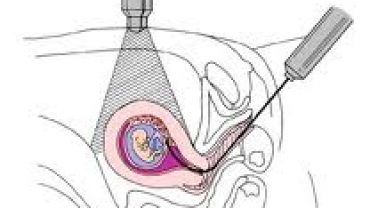
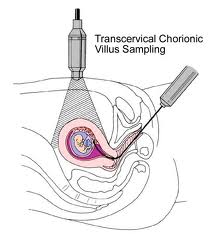
    Chorionic villus sampling is usually done early in pregnancy between the 9th and 13th week. This is a procedure that involves removing a sample of chorionic villi cells from the placenta at the point where it attaches to the uterine wall.

    In the more common trans-cervical method, ultrasound is used to guide a thin catheter through your cervix to the placenta. A small amount of chorionic villi cells are gently suctioned into the catheter. The trans-abdominal method is similar to amniocentesis and depends on ultrasound guidance. A long, thin needle is inserted through your abdomen into the placenta, where a small sample is withdrawn.

    CVS is done for many reasons, but the main reason is for early detection of chromosome abnormalities, such as Down syndrome and other genetic disorders. CVS cannot diagnose neural tube defects because it doesn’t sample any amniotic fluid for testing levels of AFP.

    The risk of a pregnancy ending in miscarriage are higher with CVS (one in 100) than with amniocentesis. Recent studies suggesting an association between CVS and limb malformation have made some doctors hesitant to offer this procedure.

    Since CVS provides a larger sample of cells than amniocentesis, results take a little less time to obtain. Some results may be possible within a day or two.

    More Prenatal Tests

    Amniocentesis
    Contraction Stress test (CST)
    Glucose Tolerance Testing
    Hemoglobin Test
    MSAFPT Test
    Non-Stress (NST) Test
    Rh Factor
    Triple Screen Test
    Ultrasound