
Author: PL Team

  • Triple Screen Test

    Triple Screen Test

    control blood in a laboratoryThis test is another method of screening maternal blood to detect spinal defects and chromosone abnormalities, especially Down syndrome. This test goes beyond alpha-fetoprotein testing and consists of one blood sample taken between the 15th and 20th week of pregnancy to analyze three substances: MSAFP, Human Chorionic gonadutropin (HCG) and estriol. The levels of these three substances in your blood may indicate the presence of Down syndrome.

    The triple screen test is used to indicate whether your baby is at higher risk for having a neural tube defect, Down syndrome, along with other rare conditions. In other words, an abnormal test result does not necessarily mean your baby will have a birth defect. Although abnormally high levels of AFP are sure to cause concern, the great majority of pregnant women with high AFP levels have nothing wrong. There are many other causes of elevated levels of AFP, including a pregnancy which is not dated correctly (if you are actually farther along than estimated, then AFP levels will be higher than expected), if you are carrying twins, or if the initial interpretation of your test results didn’t consider your weight, race or the presence of diabetes- all of which also affect AFP levels.

    It usually takes less than three days to get the results from the triple screen test, depending on the lab performing the tests. Ask your doctor when you can expect to hear the results.

    More Tests

    Amniocentesis

    Chorionic Villus Sampling (CVS)

    Contraction Stress test (CST)

    Glucose Tolerance Testing

    Hemoglobin Test
    MSAFPT Test

    Non-Stress (NST) Test

    Rh Factor

    Triple Screen Test

    Ultrasound

  • Ultrasound – Prenatal Test

    Ultrasound – Prenatal Test

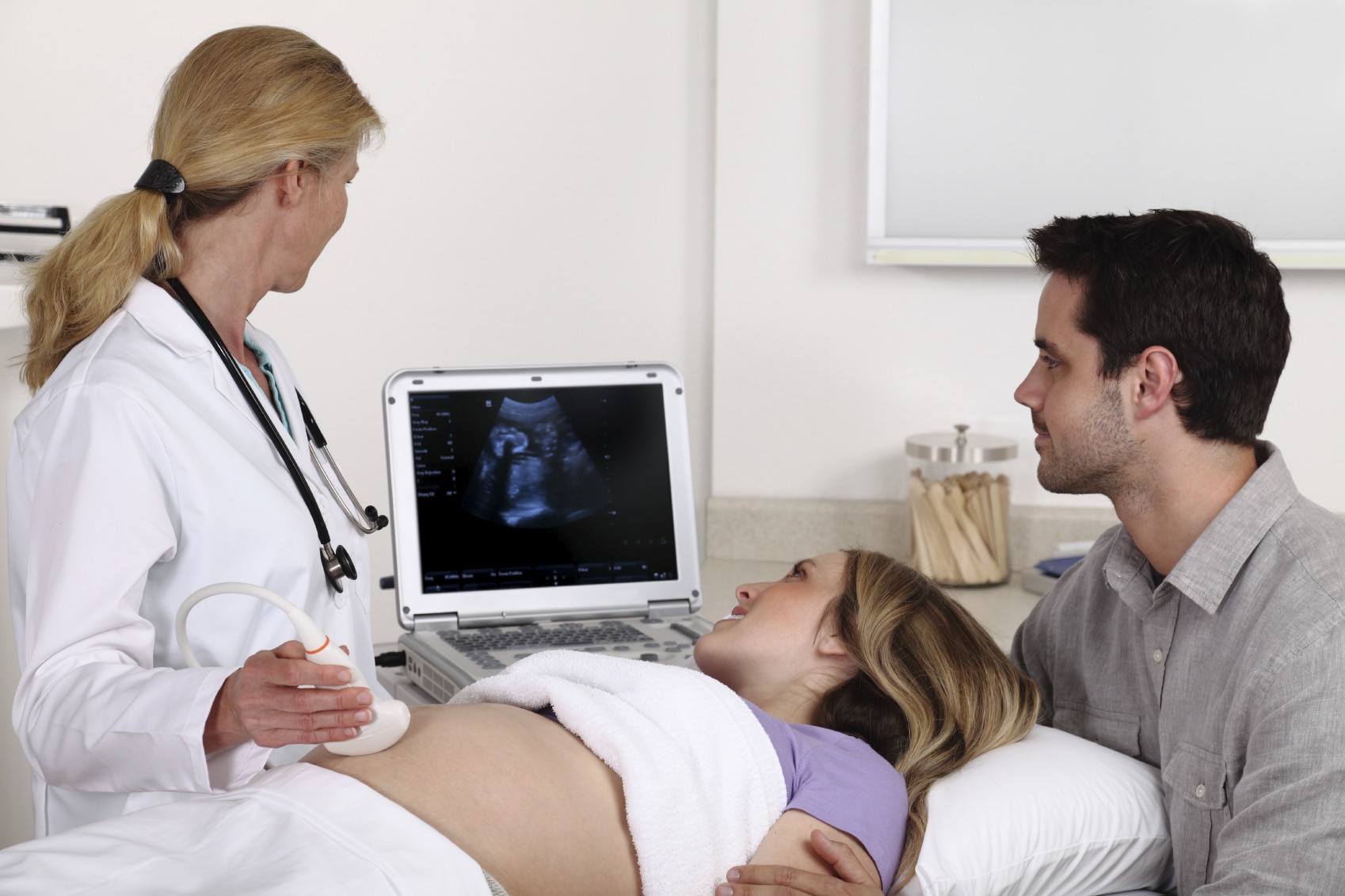
    ultrasoundAn ultrasound (or sonogram) is a non-surgical method of getting a picture of your baby. Ultrasound involves the use of high-frequency sound waves. The sound waves are directed into your uterus with a small plastic device called a transducer. The sound waved reflect off of bones and tissues and are then converted into black and white images on a screen.

    An ultrasound can be done at any time during pregnancy and may be repeated at different stages to monitor your baby’s growth and development if there is cause for concern. An advanced-level (level two) ultrasound is offered only when a problem is suspected. Usually, ultrasounds are offered between the 16th and 20th weeks of pregnancy. By that time, major structural abnormalities can be diagnosed and all four chambers of the heart can be seen (making it possible to detect some congenital heart defects.) A fetal heart can be seen beating as early as 5 or 6 weeks into your pregnancy.

    Ultrasound is one of the most valuable methods of evaluating the development of your baby and placenta. Ultrasounds are usually performed: to confirm pregnancy (or detect miscarriage), date the pregnancy (an ultrasound exam is extremely accurate for judging the fetal age before 20 weeks), learn the number of babies, evaluate risks to the pregnancy (such as implantation location of the embryo in an abnormal location), examine the baby for structural malformations, determine the location and development of the placenta, evaluate the growth and development of the baby and asses health of the baby by monitoring movements.

    Trans-vaginal ultrasounds are sometimes preferred for investigating pregnancy complications during the first trimester. For this test, a small transducer is inserted in the vagina up to the entrance of the uterus to create images of the baby on the monitor. This can be used in early pregnancy for a better view of the baby and placenta.

    More Tests

    Amniocentesis
    Chorionic Villus Sampling (CVS)
    Contraction Stress test (CST)
    Glucose Tolerance Testing
    Hemoglobin Test
    MSAFPT Test
    Non-Stress (NST) Test
    Rh Factor
    Triple Screen Test
    Ultrasound

  • Varicose Veins

    Varicose Veins

    varicose veinsWhen your blood volume and hormone levels increase with pregnancy and blood vessels in your legs become engorged, you may experience varicose veins. Your enlarged uterus tends to press against major veins in your pelvic region, adding to the problem. In addition, varicose veins run in families, so if your mother got them, you may predisposed to get them also.

    Varicose Veins Symptoms

    The symptoms of varicose veins includes pain, tenderness and aching in your legs, along with possible swelling of your ankles. Sometimes varicose veins cause no discomfort at all. Visibly, they can appear as bluish enlarged, bulging veins and can be somewhat rope-like. To prevent or minimize them, limit your standing time and rest as often as possible, with your feet elevated. Try to keep from crossing your legs and wear clothing that is loose, rather than clothes that can restrict circulation in your legs. The good news is varicose veins usually disappear within three months of delivery.

    more Discomforts

    Backaches
    Breast Discomfort
    Braxton Hicks Contractions
    Constipation
    Dizziness and Fainting
    Fatigue
    Hand Numbness
    Headaches
    Heartburn and Indigestion
    Hemorrhoids
    Increased Discharge
    Itchy Abdomen
    Leg Cramps
    Nausea and Morning Sickness
    Overheating
    Pelvic Pressure
    Sleep Trouble
    Swelling
    Urinary Problems
    Varicose Veins

  • Urinary Problems

    When your uterus puts pressure on your bladder, as it grows (also when your baby drops, close to delivery), you may experience mild incontinence and frequent urination or urinary problems. Read more of the article below:

    Urinary problems are common, especially in the third trimester, to have trouble with leaking small amounts of urine when you sneeze or cough, often referred to as “stress incontinence”.

    By doing Kegel exercises, you can tighten and tone the muscles in your pelvis, which can help control incontinence. Wearing a panty liner or sanitary pad may make you feel more comfortable. By avoiding fluids right before bedtime can reduce your bathroom trips during the night, although make sure you are getting the recommended eight 8-ounce glasses of water during the day.

    more Discomforts

    Backaches
    Breast Discomfort
    Braxton Hicks Contractions
    Constipation
    Dizziness and Fainting
    Fatigue
    Hand Numbness
    Headaches
    Heartburn and Indigestion
    Hemorrhoids
    Increased Discharge
    Itchy Abdomen
    Leg Cramps
    Nausea and Morning Sickness
    Overheating
    Pelvic Pressure
    Sleep Trouble
    Swelling
    Urinary Problems
    Varicose Veins

  • Disclaimer

    All material provided by PregnancyLounge is for information and entertainment purposes only and is not a substitute for medical advice and /or treatment. Consult your physician for information specific to your individual needs. If you are pregnant or if there is the possibility that you are pregnant, it is important that you get the advice from your physician before taking medications or supplements.

  • 6 Pregnancy Tips for 2015

    6 Pregnancy Tips for 2015

    skinGood advice is hard to come by as what’s considered good advice today may not be considered good years later.  Take for example, Teflon, the biggest craze in the 70’s due to the non-sticking nature of the coating, replaced most all coating .  Today, Teflon is looked down upon by some who say it is linked to cancer, thyroid disease, ulcerative colitis, and high cholesterol.  That wonderful product that was raved about is now something to stay away from. That said, we’ve gathered a few things on a list for the expectant mom that are considered good tips for 2014!

    Pregnancy Tip 1Exercise is good in pregnancy and can lower the risk of miscarriage, so that’s really good news.  It is said to reduce complications when in labor and even reduce the time of your labor, but don’t overdo it.

    Pregnancy Tip 2Start taking prenatal vitamins before you’re pregnant.  Prenatal vitamins help nail and hair health even when not pregnant.  I take them and I’m not expecting.  In fact, some recommend prenatal vitamins after cancer treatments to help hair return faster and healthier.  There you have it! I get mine from Walmart because they are cheaper at just $8 a pop. Check with your doctor for a prenatal vitamin suggestions.

    Pregnancy Tip 3When cleaning around the house, opt for organic or natural cleaners instead of harsh ones or those full of chemicals and toxic ingredients.  If you must use a chemical cleaner, be sure to wear rubber gloves as the toxins can penetrate your skin and enter the bloodstream and reach your baby. We found a great natural cleaner tips at Mother Earth News that seems perfect for an expectant mother.

    Pregnancy Tip 4If you have a cat, don’t change your cat litter. Have someone else do it for you. Coming into contact with the feces or urine of a cat may infect you with toxoplasmosis.  One more chore off your list!  From Wikipedia, “Toxoplasmosis is a parasitic disease caused by the protozoan Toxoplasma gondii.[1] The parasite infects most genera of warm-blooded animals, including humans, but the primary host is the felid (cat) family. ”

    Pregnancy Tip 5Do leg and foot stretches before heading to bed.  I still remember the pain of waking up in the middle of the night with a horrible foot cramp that my husband could only fix if he grabbed my foot and pulled it up toward me.  I didn’t know that you’re supposed to stretch before bedtime.

    Pregnancy Tip 6Lastly, be prepared to order a dinner while out and by the time the plate comes out from the kitchen, you’ve decided you want your husband’s meal instead.  The funny thing is, I could never get away with this when not pregnant.  But when pregnant, my husband would gladly give in knowing there was absolutely no rhyme or reason to it, nor could I change that craving.



  • Frozen Berries Recalled Due to Hepatitis A

    Frozen Berries Recalled Due to Hepatitis A

    frozen-berriesIf you are pregnant and shop at Costco or Harris Teeter, check your  freezer for frozen fruit. DO NOT eat the frozen mixed berries called, “Organic Antioxidant Blend.” Townsend Farms has issued a recall of it’s product due to an outbreak of Hepatitis A that is linked to the frozen fruit.

    Five states have had at least 34 Hepatitis A infections, Arizona, Nevada, California, Colorado and New Mexico.

    Although rare, a baby can get Hepatitis A from it’s infected mother and it can affect the baby’s liver and can cause pregnancy complications such as a premature birth.

    Symptoms of Hepatitis A include jaundice or yellowing of the skin, dark urine, fatigue, and pale looking stool. If you suspect you have been exposed to Hepatitis A, a liver function test can make a positive diagnosis.

    It can take as long as 50 days after exposure from an infected person or as little as 15 days to contract the illness.

    If you think you have been around someone with Hepatitis A, contact your physician immediately since complications can occur in pregnancy, although unlikely. Still it’s better to be safe than sorry.

    Cathy Wilson, a 58-year old San Diego resident, has filed suit against Costco and Townsend Farms, according to legal documents. She said that she had been eating the frozen berries four times a week and had purchased them at Costco.

    Wilson said she’s tired all the time, shaky and hasn’t been able to work for a month. What makes things even more difficult is the fact that she is the caregiver for her elderly mother who has Altheimer’s and is afraid that she has been afraid that her illnesses will make her mother sick and that she has purposely stayed away.  She says that she is now too weak to even drive.

    This is the second case Wilson’s attorney has filed in the frozen berries case.

    UPDATE:  Seven states are now reporting Hepatitis A illnesses from “Organic Antioxidant Blend”.  Those states are; California, Colorado, Arizona, Hawaii, New Mexico, Nevada and Utah

  • Celebrity Pregnancy Rumors – Is Beyonce Pregnant

    Celebrity Pregnancy Rumors – Is Beyonce Pregnant

    pregnancy-beyonceAlthought several sources close to Beyonce’  had released statements saying that the singer and husband Jay-Z are indeed expecting another baby, it is not true.

    Several tabloids have been reporting the news since last week that the power couple are expecting, but Beyonce and Jay-Z had remained tight-lipped about their ever-growing family.  These rumors aren’t really all that unusual since Beyonce has been pregnant every other month for years according to the tabloids. Shouldn’t she have given birth to several children by now?

    Beyonce isn’t the only one prone to pregnancy rumors, repeatedly. I don’t know how many times I’ve read that Jennifer Aniston was pregnant.  In fact, she did a comedic pretend pregnancy commercial for Smart Water where she was expecting triplets.  I can’t imagine it but expect those reports to increase given her upcoming marriage to Justin Theroux which may be on hold given Brad Pitt and Angelina Jolie are said to be planning to tie the knot this summer.

    Speaking of Angelina. She has also had her fair share of pregnancy rumors. Seems I read one not that long ago.  It’s kind of hard to be pregnant and go through breast surgery and reconstruction.  Don’t you think?

    Brad and Angelina said that they will marry sooner rather than later since their children keep asking them for a wedding date. No date has been announced as of yet since Brad is in the process of filming “World War Z “and his schedule is crazy right right now.

    The couple got engaged in 2012 after Brad gave Angelina a $500,000 engagement ring. Now that’s a ring! Again, at that time they said their wedding would be soon.  I expect an announcement will be pretty soon.  Seems they are in the news a bunch right now.  They are on a roll.

    Update:  They did it!  Brad and Angelina finally tied the knot.

  • McDonald’s to Serve Breakfast All Day

    McDonald’s to Serve Breakfast All Day

    mcdonaldsWord has it that McDonald’s plans to offer all day breakfast foods to customers.

    Bob Thompson, McDonald’s CEO has issued a statement that the chain may offer Egg McMuffins at any hour and that they are also looking at the possibility of providing food delivery in the near future.

    As sales remain stagnant, the fast food giant is looking for ways to stir up more sales.  The company has been hinting for some time that they might be considering offering Egg McMuffins, Hotcakes and McGriddles to late night customers.  Although McDonald’s has not officially made a statement concerning the menu change as to when it may happen, it looks like an all day breakfast is in the works.

    Since I only eat breakfast at McDonalds, this may just help in my opinion.  In fact, during all of my pregnancies, I had to have McDonald’s breakfast in some form to help with morning sickness.  If I had to prepare it, I didn’t want it.  This seems like a good move.

  • Teen Options

    Being a teen and pregnant may seem like a difficult experience now, but with the right support and information, you will be able to make a decision and feel that you can feel good about. There are crisis pregnancy centers (most likely in your town or very close by) that can help support you in your pregnancy decisions, as well as offer many other valuable services. They have trained counselors that can help you sort through the pros and cons of each option and explore the solutions that would work best in your life. There are 24-hour crisis pregnancy hotlines you can call and countless crisis pregnancy sites to help you on-line.

    You have three basic options: parenting, adoption or abortion. In order to make the right decision for you and your baby, you need to know everything about each of these options. This is a decision no one else should make for you. You can consider other people’s thoughts and ideas, but don’t make a decision because you think it will please your parents, your baby’s father or anyone else. Ultimately you are the one who has to live with the final decision. This may be the biggest decision you have to make, so take plenty of time to think things through carefully. Whatever you decide, please remember that your choice will affect you for the rest of your life – physically and emotionally.

    Parenting

    Parenting is a difficult but extremely rewarding experience that requires both patience and strength. If you choose to continue your pregnancy and parent, not only will you be able to watch your child grow up, you will be preparing yourself for one of the greatest and most rewarding experiences ever. However, a lot of responsibilities come with parenting, which you must realize now and accept. Parenting is a lifelong commitment to your child, promising him or her the best care possible, undying love, financial, physical, emotional, and spiritual support. It takes time and hard work to be a good parent, but it can happen. There are many resources available to help you, if you choose to parent your child.

    Read more on teen pregnancy:

    Teen Options (continued)
    Teen Pregnancy
    Teen Statistics

  • Stages of Labor

    Every woman’s labor is different, following it’s own pattern (even from pregnancy to pregnancy) and there are some things that can’t be anticipated. Although every labor and birth is unique and your labor will unfold in a very special way, the process is remarkably and beautifully constant. You can expect a sequence of events, when everything goes smoothly.

    Labor is typically divided into three distinct stages. The first stage being when your cervix softens, dilates and thins out (effacement), ending in full dilation.

    The first stage can be divided into three “phases”: the early (or latent phase), the active phase and the transition phase. The second stage of labor is when your baby passes through the birth canal and is born. During the third stage, the placenta (afterbirth) is delivered.

    Signs of Labor
    Preterm Labor
    Preterm Complications
    Preterm Labor Causes
    Preterm Prevention and Treatment
    First Stage: Phase I
    First Stage: Phase II
    First Stage: Phase III
    Second Stage
    Third Stage
    Induction of Labor
    Induction of Labor Procedures
    Labor Induction Risks
    Do It Yourself Labor Induction

  • Pregnancy Week 2

    Pregnancy Week 2

    If you are pregnant and at what you think is 2 weeks, this begins one week after the start of your last menstrual period. Your last period is finished now and the hormones estrogen and progesterone are causing your uterus to build a new layer of endometrium (your uterine lining) to prepare for your soon-to-be-conceived baby. This lining thickens and becomes engorged with blood, ready to receive, cushion and nourish your baby. At the same time, one of your ovaries is growing and ripening an egg, in preparation for ovulation.

    This is the most fertile time of your cycle and is the optimum time to make love every day or every-other day to help maximize your chances of becoming pregnant, since your body is almost ready for ovulation and an egg will very soon travel down your fallopian tube to meet up with your partner’s sperm.

    If you are using an ovulation prediction kit, this may be when you should start testing. Ovulation tests work by detecting the surge in luteinizing hormone (LH), which your pituitary gland releases just before ovulation. There are two main ovulation test varieties; one that measures LH in your saliva and one that measures LH in your urine. Be sure to read and follow the directions carefully.

    By the end of this week you may feel some cramping, particularly on one side of your abdomen, signaling, that you are ovulating. The pain typically radiates from whichever ovary is ovulating. This is called mittelschmerz (MITT-ul-shmurz) and is fairly common, although not all women feel ovulatory pains.

    Slight spotting is also not uncommon during this time. In addition to these symptoms of impending ovulation, you may notice your cervical mucus increasing and becoming more and more slippery and stretchy, because of higher estrogen levels. This will help your partner’s sperm penetrate your cervix on their way to meet your egg.

    << more weeks >>