Tag: baby

  • Mom Faces Possible Jail Time for Leaving Baby in Car

    Mom Faces Possible Jail Time for Leaving Baby in Car

    baby-carseatCHULA VISTA – A 4 month old baby almost didn’t make it and was unconscious when a maintenance worker found her in a car left alone by her 25 year old mother, Starley Cristal Geart.  This little one was heavily sweating and would not respond to pinching or loud noises but was breathing.  Temperatures outside were in the high 70’s – low 80’s that day but temps in the car would have been much higher.

    Geart has two children other than her baby, Kaylahni.  All of whom were taken from her when this incident happened.  In October, her children were returned.  She faces one count of child endangerment and an allegation of great bodily injury to her child.

    Chula Vista Superior Court Judge Edward P. Allard III determined that the evidence was sufficient for Geart to stand trial.  If convicted, she faces a possible sentence of up to 12 years in prison.

    In my opinion, I don’t think this young mom knew not to leave her child in a car when it’s in the 70’s.  It wasn’t that long ago that a dad forgot to drop his child off at daycare and went into work only to come out later to find the child not breathing.  The heartache this family must have gone through.

    Since Spring is here and the temps will only be going up, we wanted to remind parents to never leave a baby or child in a car, even for a short time.  During the summer months, the temperature inside a parked car can reach over 120 degrees in as little as 10 minutes.

    While this incident took place last summer, this story isn’t unique.  Every year many children lose their lives after being left in hot cars.  We must be diligent in getting this message out to those parents who are unaware of the danger.

    This baby was unconscious and OK now but if left much longer, it would have been a very very sad ending.

  • Pregnant Week 7

    Pregnant Week 7

    This week of pregnancy your baby is about 1/3 of an inch in length now (crown-to-rump) and continuing to develop and grow very rapidly. Facial characteristics are now forming, with the beginnings of eyes, ears and nostrils. The upper and lower jaws and mouth are forming and the detail of your baby’s lips, tongue and teeth buds may now be visible.

    The lenses of your tiny baby’s eyes are also developing this week. Your baby’s brain and head are growing, along with the intestines, pituitary gland and pancreas. The leg and arm buds have grown and resemble paddles.

    Your baby’s heart is now made up of four chambers and pumping blood at about 150 beats per minute, which may be detected on ultrasound.

    You are still probably not ‘showing’ yet, although you may have gained or lost (if you’ve been bothered by morning sickness) a few pounds at this point, but you are most likely about the same as pre-pregnancy. Even though changes in you are happening much more gradually than your baby, don’t worry, those changes will come soon.

    Your breasts and nipples may be more tender or sore than you experience just prior to the beginning of your period, caused by hormonal changes that are associated with pregnancy. They also may be slightly larger and a bit swollen at this point, which is completely normal. In addition, you may notice the areola around your nipples getting darker and the glands elevating.

    << more weeks >>

  • Pregnant Week 5

    Pregnant Week 5

    In your pregnancy, you are now in week 5. Your baby is now called an embryo and is about 1/16 of an inch long. All of your baby’s major organs are under development now. The neural tube, which will later be referred to as the spinal cord, will fuse baby’s primitive heart has begun to take shape, with the heart tubes beginning to fuse together and your baby’s heart will start early contractions, which later become distinct beats.

    By the end of this week, it may be possible to detect your baby on an ultrasound, since the sac is now visible, although ultrasounds are not done routinely this early in pregnancy.

    Your period is late now and you are probably beginning to suspect that you’re pregnant. If you have taken a home pregnancy test, you most likely have already gotten a positive result. Some women don’t have a positive until a week or more down the road, so don’t be disappointed if your result was negative.

    If your period hasn’t shown up within a few days, then you should re-test, because your Human Chorionic Gonadotropin (HCG) levels rise as your pregnancy progresses and become easier for home pregnancy tests to detect.

    You may feel sick to your stomach and begin vomiting, as the dreaded “morning sickness” kicks in. Usually this happens only in the morning (or is worse earlier in the day), but some women have to deal with it the entire day and even into the night.

    On the positive side, recent studies have shown that morning sickness can be a sign of a healthy pregnancy. But, if you feel fine, don’t worry, just count yourself as one of the fortunate few who don’t have to deal with this miserable pregnancy symptom.

    << more weeks >>

  • What is a Doula?

    To be sure you get the kind of help you need in labor, you might want to consider having a doula. The ancient Greek word “doula” means “woman servant”. Nowadays, it refers a woman who is professionally trained as childbirth assistant, who provides emotional, physical, informational support, as well as non-clinical advice during pregnancy, labor and soon after birth. It helps to have reassurance from experts who can help you relate the intense physical sensations and emotions to what you already know intellectually.

    Nurses, doctors and midwives can offer some guidance, but they may be limited by their clinical duties and the needs of other laboring women in their care. Doulas don’t work as midwives and they aren’t nurse practitioners.

    Doulas serve as labor coaches and advocates for you, the laboring woman, as well as your partner.

    Doulas often meet with you before labor to learn your preferences regarding the use of pain medication and also to talk about any concerns or fears you may have. She can help you overcome your fears related to labor, birth and motherhood in general. During labor, she can help you accomplish your wishes and make adjustments if unexpected complications arise.

    Doulas provide constant, uninterrupted support throughout labor and delivery, with no breaks (that is, unless you are sleeping), no shift changes, no clinical responsibilities or other women to care for. Her knowledge and experience reassure you as she guides you in breathing techniques, massage, suggestions for position changes and relaxation techniques. She uses a wide range of comfort measures and coping techniques such as the use of bath, shower, birth ball, hot and cold packs and even aromatherapy.

    The continuous assistance of a doula throughout labor has been shown to improve both the physical and the physiological well-being of the mother. By reducing stress, doulas reduce a woman’s need for pain relief medications. Women supported by a doula during labor have been shown to have close to a 60% reduction in epidural requests. In hospitals with high cesarean rates (above 25%), a doula’s presence lowers the chances of a cesarean by 50%. The rates of other interventions, such as the use of forceps is reduced 40%, as Pitocin (or oxytocin) use is reduced by about 40% also. Women who have a doula present during labor and delivery have been shown to have shorter labors. Labors can be possibly reduced by about 25% (or close to 3 hours). In addition, women’s satisfaction with their birth experience, postpartum physiological state, success in breastfeeding and interactions with their newborn are improved.

  • Postpartum Depression (continued)

    Things that may contribute to postpartum depression include: prior history of major depression or family history, lack of social or emotional support, a difficult labor and birth, premature birth or baby born with defects, prenatal depression, hormonal changes, unplanned pregnancy, low thyroid levels, marital or relationship problems, low self-esteem, baby behavior (sleep trouble, breastfeeding difficulties, colic, etc.), being a single mother, financial problems and stressful events (such as a recent move or loss of a loved one).

    Postpartum depression affects both mother and baby. One of the most troubling consequences of postpartum depression is the side effects it has on a new mother’s ability to care for her baby. Mothers often feel helpless or inadequate, withdrawing from their responsibilities. In addition, babies are highly sensitive to a mother’s sadness, silence, and inattentiveness. In the long run, child development and emotional growth may be affected by postpartum depression, leading to possible behavior problems (including hyperactivity). This is especially true if postpartum depression lasts for a long time or goes untreated.

    It’s very important that women suffering from postpartum depression reach out for the proper help as soon as possible. You may find it comforting to talk with your doctor or midwife if you are having trouble coping after the birth of your baby. While postpartum depression is a serious condition, if you receive proper medical attention, it can be treated fairly easily with anti-depressant medications, counseling and support groups. Without proper treatment, your depression may get even worse and last much longer. Regular exercise, eating a healthy, well-balanced diet, getting out of the house, socializing with friends, getting plenty of rest and getting assistance with housework and meals are all helpful way to cope better.

    << Depression During Pregnancy >>
    << Postpartum Depression >>
    << Depression After Delivery >>

  • CMV Infections

    According to the HealthDay News, CMV risk can be significantly reduced when a drug called hyperimmune globin is used as it can keep the virus from being passed onto an unborn baby. CMV can be a dangerous virus for unborn babies and infants but is not usually dangerous to adults and children. By the age of 30, according to the March of Dimes, about half of the US population have contracted the virus. Hyperimmune globin gives a pregnant mother’s immune system a boost to fight the virus.

    Approximately one percent of all babies are born with CMV infection which can cause serious neurological problems including death. If a woman is infected during pregnancy, she has a 40% chance of passing the virus on to her newborn. There is currently no effective treatment of CMV.

    The study was published in the New England Journal of Medicine and according to Dr. Patrick Duff (co-author of the study), more studies need to be done to confirm these findings.

  • Breastfeeding or Bottle Feeding: Advantages and Disadvanges

    The choice is yours. Here are some of the advantages and disadvantages of breastfeeding and bottle-feeding. Remember, you don’t have to opt exclusively for either the breast or the bottle alone. Many parents find that a combination of both methods works well and lets them enjoy the advantages of each.

    Advantages of Breastfed Babies

    Breastfed babies are less likely to become ill in the first year of life, because breast milk provides your infant with antibodies to fight off some common childhood illnesses. Plus, immune factors in breast milk help protect your baby until his or her own immune system has developed. Living cells in breast milk, such as white cells, fight infection and are important in helping your baby stay healthy. Babies who are strictly breastfed , with no added formula, until at least four months of age, suffer half the number of ear infections as those who are never breastfed.

    It’s more convenient. It can be done anywhere, at any time, whenever your baby shows signs of being hungry. No bottles to prepare, no sterilizing and breast milk is always just the right temperature; you never have to keep your baby waiting.

    Breastfeeding has been shown to reduce a woman’s risk of developing breast cancer and also ovarian cancer. When breastfeeding for three months or longer, the risk is cut in half.

    Nursing helps speed the shrinking of the uterus back to it’s pre-pregnancy size; helping your body recover more quickly from giving birth. Hormones, such as oxytocin , are released when your baby sucks, which causes your uterus to contract a bit each time your baby nurses. You can also lose weight more quickly if you breastfeed, because nursing uses up the fat you stored up in pregnancy.

    << Breastfeeding (continued) >>

    << Advantages of Bottle-feeding >>

  • Should I Breastfeed or Bottle-Feed?

    Experts agree that choosing to breastfeed your baby is the best choice for both mother and child. Here are six great reasons to choose breastfeeding.

    • Breast milk is easier to digest than cow’s milk or commercial formulas. The proportion of protein is lower in mother’s milk, making it easier for babies to handle. Breast milk also contains one-third less mineral salt, making it easier on baby’s kidneys.
    • Because of the easier digestibility of breast milk, babies that are breastfed are almost never constipated and they also rarely have diarrhea.
    • Breast milk is less likely to cause your infant to become overweight and also decreases the chances of obesity later in life.
    • Virtually no baby is allergic to breast milk (although some babies can have allergic reactions to certain foods in their mother’s diets). Breastfeeding can actually protect your baby from allergies, eczema and asthma and can also help make allergies less severe, if they do develop.
    • It is less expensive than bottle-feeding. There are no bottles, sterilizers and expensive formula to buy.
    • Breastfeeding brings mother and baby together, skin to skin, at least six to eight times a day. It can feel warm and comforting to you as well as your baby. The emotional gratification and intimacy, can be very fulfilling. Some believe breastfeeding leads to a closer bond between mother and baby. Also, many women feel a great sense of pride in seeing their baby grow strong and healthy on their milk alone.

    << Advantages of Bottle-feeding >>

  • 6 Advantages of Bottle-feeding

    Bottle-feeding is best when you are advised not to breastfeed because of either your health or the health of your baby. Such health concerns are include serious infections, illnesses or certain medications taken by the mother, abnormal shape of your newborn’s mouth (such as cleft lip or cleft palate), which would make it difficult for your baby to latch on, and rare disorders in your newborn that make digesting breast milk practically impossible.

    • Bottle-feeding doesn’t tie the mother down to her baby. She’s able to work outside the home, shop, go out with friends and even sleep through the night (sometimes), because someone else can feed the baby. Although expressing milk with a breast-pump can enable others to take over some feedings.
    • Bottle-feeding allows the father to share the feeding responsibilities more easily and not feel left out.
    • Bottle-feeding doesn’t interfere with a couple’s sex life (except, of course, when the baby wakes up for a feeding at the wrong time). Breastfeeding can, because the lactation hormones can make the vagina dry and also leaky breasts during lovemaking can be a turn-off for some couples.
    • Bottle-feeding doesn’t cramp your diet or eating habits. You can eat all the garlic, spicy foods and cabbage you want! Whereas with breastfeeding, you are really still eating for two, just as you were during pregnancy, so you still need to continue eating nutritiously.
    • Bottle-feeding may be more preferable for a woman who is more comfortable bottle-feeding than breastfeeding their baby in public. Some women feel squeamish about the possibility of nursing in public and some feel it would be too embarrassing.
    • With bottle-feeding, you can see exactly how much milk your baby has taken, but with breastfeeding, you are merely guessing by how long your baby has nursed & how many wet diapers you have changed.
  • Kelsey Grammer and Wife Kayte Welcome a Daughter

    Kelsey Grammer and Wife Kayte Welcome a Daughter

    Kayte and Kelsey Grammer welcomed a baby girl on Friday, July 13th in LA.

    Shortly after announcing that they were expecting twins, the couple lost the little boy and in 2010 they also lost a child.

    In a statement from the couple, “A glorious birth with a lingering sadness is ours today. We choose to celebrate the life that has been given us. We proudly introduce our Faith to the world today looking forward to the days ahead and the children yet to come.”

    Congratulations to Kayte and Kelsey.

  • Pregnancy Weight Gain

    Pregnancy Weight Gain

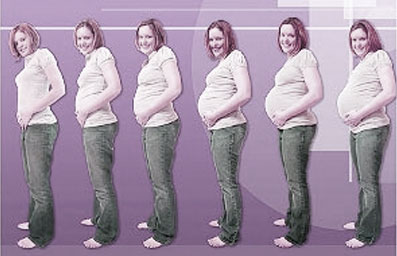
    The appropriate weight gain during pregnancy depends on several factors, including your height, your age and how much you weighed before you conceived. Typically, if you are average or “normal” weight before becoming pregnant, it’s recommended that you gain between 25-35 pounds; about 2-5 pounds during the first trimester and approximately 1 pound per week after that.

    What is a healthy weight gain for pregnancy?

    If you are underweight before becoming pregnant, it’s recommended that you gain a bit more weight: between 28-40 pounds preferably (depending on the severity of the weight problem). If you are overweight before becoming pregnant, it’d recommended that your total weight gain be a bit less; between 15-25 pounds.

    If you are pregnant with multiples, you will need to gain more weight, depending on the number of babies you are carrying (approximately 35-50 pounds with twins). Weight gain during pregnancy should be gradual with the most weight being gained in the last trimester, although some women notice their weight gain slowing or possibly a slight weight loss just prior to delivery.

    Check with your doctor or midwife to determine how much weight gain is healthy for you. Remember, a proper diet and adequate weight gain during pregnancy is essential for your health and optimum development your baby.

    Inadequate weight gain can cause problems to your baby such as prematurity and low birth weight. Excessive weight gain can lead to a larger baby, which can complicate the birth process, cause certain health complications during pregnancy and may be difficult to lose after delivery. During pregnancy, weight gain can be broken down to: increased blood: 3-4 pounds, breast tissue: 1-2 pounds, uterine muscle: 2- 2 1/2 pounds, baby: 6- 8 1/2 pounds, placenta: 1 1/2- 2 pounds, amniotic fluid: 2 pounds, maternal fat stores: 7-8 pounds and water in maternal tissue: 4 pounds. What are these little bumps that have appeared around my nipples?

    Those little bumps that surround your nipples (on the dark area called the areola) are quite normal and are called Montgomery glands or, “Montgomery’s tubercles”. They have always been present, but during pregnancy, they tend to enlarge and become much more pronounced, typically first appearing during the first trimester. They become more prominent and swell as pregnancy progresses. They can vary greatly in number, averaging between 4 and 28 per areola. These bumps are glands that produce oils that lubricate your nipples, as well as discourage bacterial growth during breastfeeding. The lubrication they create helps to keep the skin around your nipples healthy and elastic. Using soap to wash them can remove these protective oils and even lead to cracked and sore nipples during breastfeeding.

    Is it safe to continue using tanning beds throughout pregnancy?

    The rays emitted by the bulbs in tanning beds are just as safe as the rays of the sun. Exposure to ultraviolet radiation (from a tanning bed or direct sunlight) can prematurely age your skin and heighten your risk of developing skin cancer. Sun exposure can also increase your risk of developing (or intensify) Chloasma or, “the mask of pregnancy”, which is brown patches that appear on your face. It’s believed that the UV light used in tanning beds doesn’t reach far enough into the body to harm a developing baby, but anything that raises your core body temperature should be avoided. Overheating can harm your baby, particularly in the first trimester, when most major organs and structures are forming. UV rays have also been associated with folic acid deficiency, which can lead to neural tube defects. If you must tan, stay in for short periods of time, drink plenty of water and make sure the room is well ventilated. Consider using a spray bottle filled with water, during your tanning session to keep you cool. Get out of the tanning bed before you become hot.

    Menstrual Periods, Drinking and Hair Dye
    Cats, Ultrasounds and First Movements
    Fish, Exercising and Sleep
    Sex, Cesarean and Back Labor
    Tanning Beds, Weight Gain and Areola Changes
    Castor Oil, Smaller Shoes and Nesting Instincts
    First Prenatal Visit

  • SIDS Questions

    With regard to SIDs, is there a risk of choking when my baby sleeps on his or her back?

    Not usually, babies automatically swallow or cough up fluids. Doctors have found no increase in choking or other problems in babies sleeping on their backs.

    What about side sleeping?

    To keep your baby safest when he or she is sleeping, always use the back sleep position rather than the side position. Babies who sleep on their sides can roll onto their stomachs. A baby sleeping on his or her stomach is at greater risk of SIDS.

    Some infants may have health conditions that require them to sleep on their stomachs such as reflux.

    If you are unsure about the best sleep position for your baby, be sure to talk to your doctor or nurse.

    Some products claim to be designed to keep a baby in one position. These products have not been tested for safety and are NOT recommended.

    Are there times when my baby can be on his or her stomach?

    Yes, place your baby on his or her stomach for “tummy time,” when he or she is awake and someone is watching. When the baby is awake, tummy time is good because it helps your baby’s neck and shoulder muscles get stronger.

    Will my baby get “flat spots” on his or her head from back sleeping?

    For the most part, flat spots on the back of the baby’s head go away a few months after the baby learns to sit up. Tummy time, when your baby is awake, is one way to reduce flat spots. Another way is to change the direction you place your baby down to sleep. Doing this means the baby is not always sleeping on the same side of his or her head. If you think your baby has a more serious problem, talk to your doctor or nurse.

    What other things can I do to keep my baby healthy?

    • Eat the right foods if you are nursing.
    • Get frequent check-ups with your doctor or nurse.
    • Breastfeed your baby.
    • Take your baby for scheduled well-baby check-ups.
    • Make sure your baby gets his or her shots on time.
    • Enjoy your baby!