Tag: pregnant

  • Fatigue in Pregnancy

    Fatigue in Pregnancy

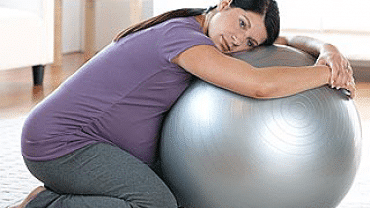
    When your pregnant body is working overtime, growing a human inside it, as well as with all the added hormonal changes that accompany pregnancy, it’s no wonder you may be experiencing less energy than usual. Get extra rest and sneak in naps when possible. You need extra sleep during pregnancy, so try and get to bed an hour or two earlier than you used to. Believe it or not, daily exercise and activity may actually increase your energy level, so go for a walk. Listen to your body signals and don’t overdo it.

    More Pregnancy Discomforts

    Backaches
    Breast Discomfort
    Braxton Hicks Contractions
    Constipation
    Dizziness and Fainting
    Fatigue
    Hand Numbness
    Headaches
    Heartburn and Indigestion
    Hemorrhoids
    Increased Discharge
    Itchy Abdomen
    Leg Cramps
    Nausea and Morning Sickness
    Overheating
    Pelvic Pressure
    Sleep Trouble
    Swelling
    Urinary Problems
    Varicose Veins


  • Dizziness and Fainting

    When your blood sugar level becomes low, because you’ve gone too long without eating or when your blood suddenly shifts, causing your blood pressure to drop rapidly, you may experience some light headedness or dizziness and feel like fainting. Another common cause in the last half of pregnancy can be the extra pressure of your uterus on blood vessels and arteries. Make sure you don’t go for long periods of time without eating. Take snacks (especially those high in protein and iron) with you when you go places. Always remember to change positions and stand up slowly after sitting or lying down to avoid feeling dizzy and don’t stand for extended periods of time.

    More Pregnancy Discomforts

    Backaches
    Breast Discomfort
    Braxton Hicks Contractions
    Constipation
    Dizziness and Fainting
    Fatigue
    Hand Numbness
    Headaches
    Heartburn and Indigestion
    Hemorrhoids
    Increased Discharge
    Itchy Abdomen
    Leg Cramps
    Nausea and Morning Sickness
    Overheating
    Pelvic Pressure
    Sleep Trouble
    Swelling
    Urinary Problems
    Varicose Veins

  • Pregnant Week 7

    Pregnant Week 7

    This week of pregnancy your baby is about 1/3 of an inch in length now (crown-to-rump) and continuing to develop and grow very rapidly. Facial characteristics are now forming, with the beginnings of eyes, ears and nostrils. The upper and lower jaws and mouth are forming and the detail of your baby’s lips, tongue and teeth buds may now be visible.

    The lenses of your tiny baby’s eyes are also developing this week. Your baby’s brain and head are growing, along with the intestines, pituitary gland and pancreas. The leg and arm buds have grown and resemble paddles.

    Your baby’s heart is now made up of four chambers and pumping blood at about 150 beats per minute, which may be detected on ultrasound.

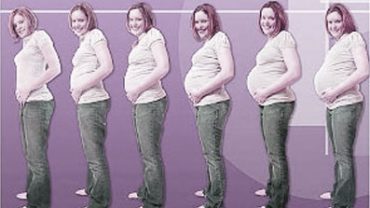
    You are still probably not ‘showing’ yet, although you may have gained or lost (if you’ve been bothered by morning sickness) a few pounds at this point, but you are most likely about the same as pre-pregnancy. Even though changes in you are happening much more gradually than your baby, don’t worry, those changes will come soon.

    Your breasts and nipples may be more tender or sore than you experience just prior to the beginning of your period, caused by hormonal changes that are associated with pregnancy. They also may be slightly larger and a bit swollen at this point, which is completely normal. In addition, you may notice the areola around your nipples getting darker and the glands elevating.

    << more weeks >>

  • Pregnant Week 6

    Pregnant Week 6

    Your baby is about 1/2 of an inch in length (from crown to rump) and is experiencing rapid growth. Limb buds begin to appear on the body, which will later form your baby’s arms and legs. Mid-way through this week, your baby’s eyes begin to form and tiny depressions will start to appear on either side of his or her head where the ears and inner ear will later form.

    Your baby’s digestive system is becoming more refined as the stomach and intestines develop. The appendix is in place now, as well. At this point, your baby is completely enclosed in the amniotic sac and the stalk begins to grow into the umbilical cord, forming blood vessels within. Your baby’s heart is beating and pumping blood, providing circulation for its tiny body this week.

    It’s been about an entire month now, since your baby was conceived, but you may not notice too many changes in your body quite yet. Your uterus is growing, but you probably haven’t noticed any major changes to your abdomen. It most likely hasn’t gotten much thicker at this point, especially if this is your first pregnancy.

    It’s normal for you to feel more tired and exhausted than you usually do. Fatigue is quite common throughout pregnancy, since your body is working so hard to create this little baby. Make sure you get plenty of rest (a nap in the afternoon wouldn’t hurt). Continue to take your prenatal vitamins, in addition to eating a well-balanced diet, because fatigue is often aggravated by a deficiency in iron or protein.

    << more weeks >>

  • Pregnant Week 5

    Pregnant Week 5

    In your pregnancy, you are now in week 5. Your baby is now called an embryo and is about 1/16 of an inch long. All of your baby’s major organs are under development now. The neural tube, which will later be referred to as the spinal cord, will fuse baby’s primitive heart has begun to take shape, with the heart tubes beginning to fuse together and your baby’s heart will start early contractions, which later become distinct beats.

    By the end of this week, it may be possible to detect your baby on an ultrasound, since the sac is now visible, although ultrasounds are not done routinely this early in pregnancy.

    Your period is late now and you are probably beginning to suspect that you’re pregnant. If you have taken a home pregnancy test, you most likely have already gotten a positive result. Some women don’t have a positive until a week or more down the road, so don’t be disappointed if your result was negative.

    If your period hasn’t shown up within a few days, then you should re-test, because your Human Chorionic Gonadotropin (HCG) levels rise as your pregnancy progresses and become easier for home pregnancy tests to detect.

    You may feel sick to your stomach and begin vomiting, as the dreaded “morning sickness” kicks in. Usually this happens only in the morning (or is worse earlier in the day), but some women have to deal with it the entire day and even into the night.

    On the positive side, recent studies have shown that morning sickness can be a sign of a healthy pregnancy. But, if you feel fine, don’t worry, just count yourself as one of the fortunate few who don’t have to deal with this miserable pregnancy symptom.

    << more weeks >>

  • Pregnant Week 4

    Pregnant Week 4

    At the end of week 4 of pregnancy, you’re probably expecting your menstural period (or crossing your fingers it won’t come, if you were trying to conceive).

    Most women don’t notice any early pregnancy symptoms quite yet, but some may already. Typically, a missed period is one of the first signs of pregnancy.

    Many of the early pregnancy symptoms are very similar to those you get every month right before (or during) your period, including breast tenderness, light cramping, fatigue and mood swings.

    During this week, the newly-implanted ball of cells are growing very rapidly, multiplying and grouping together. It divides into two parts, one becoming the placenta and the other becoming your baby. Different layers of cells are forming, which develop into specialized parts of your baby’s body. These three germ layers are the ectoderm, endoderm and mesoderm.

    The amniotic sac and the amniotic cavity will begin to form and the yolk sac has also appeared. The yolk sac will later give rise to your baby’s digestive tract. Your tiny little one is undergoing many great changes.

    A home pregnancy test may show a positive at the end of this week. Many tests can provide positive results as early as 10 days after conception, but you may want to wait a few days for more accurate results.

    You should be avoiding all medications (even over-the-counter and herbal ones), unless you’ve checked with your doctor or midwife about their safety during pregnancy first. Many things that are safe for you when you’re not pregnant can hurt your baby now. Some cold medications, sinus drugs and pain-relief products can cause problems for you and your developing baby.

    << more weeks >>

  • Pregnant Week 3

    Pregnant Week 3


    In your pregnancy, you are now in week 3. About 2 weeks before your next expected menstrual period (at the beginning of this week), the amount of estrogen in your body increases dramatically and then drops. This triggers your pituitary gland to release a surge of luteinizing hormone (LH), prompting one of your ovaries to release a ripened egg (ovum). The egg moves down into the fallopian tube towards your uterus, with the help of muscular contractions and millions of hair-like cilia; to wait for one lucky sperm to penetrate it. Sometime between 12-48 hours after you ovulate, one sperm will break through the outer layers of the ovum and complete conception. Now, you are officially pregnant! This is also the moment when the gender of your baby is determined.

    The ball of cells divide and multiply, as it travels down the fallopian tube to your uterus. After about a 7-10 day journey, the fertilized egg arrives and briefly floats freely in your uterus, as it continues it’s growth and development. It then attaches to the wall of your uterus and implants into the lining.

    Occasionally, when the fertilized egg implants itself into the uterine wall, women may experience a small amount of spotting. Implantation bleeding typically occurs just before or at the same time you would normally expect your period to begin, but it’s less heavy than a regular menstrual period and a different shade, usually pinkish or brown.

    You need to eat good food to keep both you and your tiny growing baby healthy. Your baby’s health at birth is closely tied to what your diet is like right now. Make sure you get plenty of fruits and vegetables, as well as foods that contain calcium and protein. Try to avoid junk foods, such as those that have been fried and those that are full of sugar.

    If you’ve already had a few alcoholic drinks during your pregnancy, don’t worry about it, but don’t continue to consume alcohol. It’s best not to drink any alcohol during pregnancy at all; even when you’re planning to become pregnant. Alcohol affects how your baby’s brain and body develop, because when you drink, alcohol reaches your baby very fast and just a few drinks can lead to a condition called fetal alcohol syndrome (FAS). The brain of a baby with FAS may work more slowly than the brain of a healthy baby and also they may have severe heart problems.

    << more weeks >>

  • Pregnancy Week 2

    Pregnancy Week 2

    If you are pregnant and at what you think is 2 weeks, this begins one week after the start of your last menstrual period. Your last period is finished now and the hormones estrogen and progesterone are causing your uterus to build a new layer of endometrium (your uterine lining) to prepare for your soon-to-be-conceived baby. This lining thickens and becomes engorged with blood, ready to receive, cushion and nourish your baby. At the same time, one of your ovaries is growing and ripening an egg, in preparation for ovulation.

    This is the most fertile time of your cycle and is the optimum time to make love every day or every-other day to help maximize your chances of becoming pregnant, since your body is almost ready for ovulation and an egg will very soon travel down your fallopian tube to meet up with your partner’s sperm.

    If you are using an ovulation prediction kit, this may be when you should start testing. Ovulation tests work by detecting the surge in luteinizing hormone (LH), which your pituitary gland releases just before ovulation. There are two main ovulation test varieties; one that measures LH in your saliva and one that measures LH in your urine. Be sure to read and follow the directions carefully.

    By the end of this week you may feel some cramping, particularly on one side of your abdomen, signaling, that you are ovulating. The pain typically radiates from whichever ovary is ovulating. This is called mittelschmerz (MITT-ul-shmurz) and is fairly common, although not all women feel ovulatory pains.

    Slight spotting is also not uncommon during this time. In addition to these symptoms of impending ovulation, you may notice your cervical mucus increasing and becoming more and more slippery and stretchy, because of higher estrogen levels. This will help your partner’s sperm penetrate your cervix on their way to meet your egg.

    << more weeks >>

  • 19 Weeks Pregnant

    19 Weeks Pregnant

    If you are at 19 weeks pregnant, your baby is approximately 5 – 6 inches in length (crown-to-rump) and weighs 7-8 ounces. A white, cheesy-textured coating called Vernix is now being secreted by your baby’s skin and beginning to form on your baby. This substance protects his or her delicate skin throughout pregnancy and assists with passage through the birth canal.

    If your baby is a girl, her uterus is clearly visible at this point and she has six million eggs in her ovaries — six times the number she will have at birth! If your baby is a boy, his testes are apparent and the prostate gland is beginning to develop.

    Your baby may be able to hear sounds from outside your body and he or she will begin to recognize the voices of you and your partner. Loud noises outside the uterus may cause your baby to become startled and jump a bit.

    The size of your uterus (along with your baby) has grown considerably over the last few weeks. The top of your uterus is now just over halfway between your pubic bone and your belly button. Your breasts have increased in weight and are enlarging more and more as your pregnancy progresses, about 6-7 ounces each so far. Many women have an increase of one or two cup sizes, so a good support bra is a valuable investment.

    Your uterus may practice contracting about now. These are called Braxton Hicks contractions and aren’t the same as labor contractions. They only happen once in a while and tend to go away when you move around. If you have more than 5 in an hour or experience severe backache and cramping, you need to contact your doctor or midwife.

    << more weeks >>

  • 18 Weeks Pregnant

    18 Weeks Pregnant

    If you are at 18 weeks and pregnant, your baby is about 5 inches in length (crown-to-rump) and weighs close to 5 ounces by now. Meconium (your baby’s first bowel movement) is beginning to collect in the colon. Meconium is made up of undigested debris from the amniotic fluid and various secretions of the digestive tract and is greenish black or brown in appearance.

    Circulation of blood is now established and the umbilical cord lengthens and thickens in response to the rapidly growing needs of your baby. Though there is no direct exchange of blood between you and your baby, the placenta is transferring nutrients and oxygen from your blood to your baby via the umbilical cord. Your baby and the placenta are now almost equal in size.

    You may have gained between 10-13 pounds by now, however weight gain varies greatly from woman to woman and pregnancy to pregnancy. The top of your uterus should be just below your belly button now and due to the growth of your belly, your sense of balance may be affected. Maternity clothes may be a “must” now if you’ve been pregnant before, otherwise it’s about time to start shopping for that new maternity wardrobe!

    You may be having an ultrasound around this time, which can detect many physical abnormalities in your baby. This ultrasound is also valuable for determining placental position, amniotic fluid level and your baby’s anatomy. You may be able to determine your baby’s gender, if you’d like to know, although remember that ultrasounds are not 100% accurate. If you choose not to find out the gender of your baby, tell this to the technician at the beginning of your ultrasound.

    << more weeks >>

  • 17 Weeks Pregnant

    17 Weeks Pregnant

    If you are pregnant and at 17 weeks, your baby is about 4 inches in length (crown-to-rump) and weighs close to 3 ounces. Your baby is forming “brown fat” deposits under his or her skin now. This fat will help your baby to maintain his or her body temperature after birth.

    Your little one is drinking an average of 16 ounces of amniotic fluid a day now and also inhaling and exhaling it, in preparation for breathing after birth. Your baby may get hiccups at this point, although you probably won’t be able to feel them quite yet.

    The taste buds are developed enough now for your baby to distinguish sweet and bitter and more reflexes are developing, including blinking. Your baby’s movements have become more coordinated and soon you will start to feel him or her exercising muscles.

    You, as well as others notice your expanding belly easily now. Your uterus has grown significantly since the early weeks of pregnancy and this needs to be supported by your muscles and ligaments. Round ligaments are attached to each side of the upper uterus and also to the pelvic side wall. These ligaments are stretching to accommodate your enlarging uterus, which may explain the general achiness and pain you may notice in your belly. If you experience this type of discomfort, lying down may help.

    Many women begin to experience the first detectable movements of their baby (called quickening) around this time, which can easily be described as one of the most exciting moments of your pregnancy and will undoubtedly be very reassuring. You may be more likely to feel your baby earlier if you are thin or if this is your second pregnancy.

    << more weeks >>

  • 16 Weeks Pregnant

    16 Weeks Pregnant

    16 weeks pregnant
    If you are pregnant and at 16 weeks, your baby is a little over 4 inches in length (crown-to-rump) and weighs about 2 – 3 ounces. Rapid and sustained growth will continue all through this week, as muscles grow stronger and your baby’s head and neck grow straighter. The body is finally starting to catch up with the head growth now.

    Your baby’s eyes are sensitive to light and if a bright light is held against your belly, it may gradually move its hands up to shield its eyes, even though they are still firmly closed. Your little baby’s genitals are formed well enough now that it may be possible to tell the gender on ultrasound, although ultrasounds can be wrong when it comes to gender determination, especially done this early in pregnancy.

    Your uterus will continue to move upwards which will start to relieve the pressure on your bladder, and as a result, your need for frequent urination should be reduced. The top of your uterus has risen up, so you can probably feel it easily about 3 inches below your belly button.

    Sleeping on your belly has most likely become too uncomfortable, while sleeping on your back may cause your growing uterus to compress major blood vessels (the aorta and the inferior vena cava). You will need to learn to sleep on your side, using extra pillows for support.

    Some women experience constipation during pregnancy and a change in bowel habits. Make sure that you drink lots and lots of water, as much as eight 8-ounce glasses a day and add extra fiber to your diet. Exercise also helps, so try going for a daily walk.

    << more weeks >>