
Category: Pregnancy

  • Ultrasound – Prenatal Test

    Ultrasound – Prenatal Test

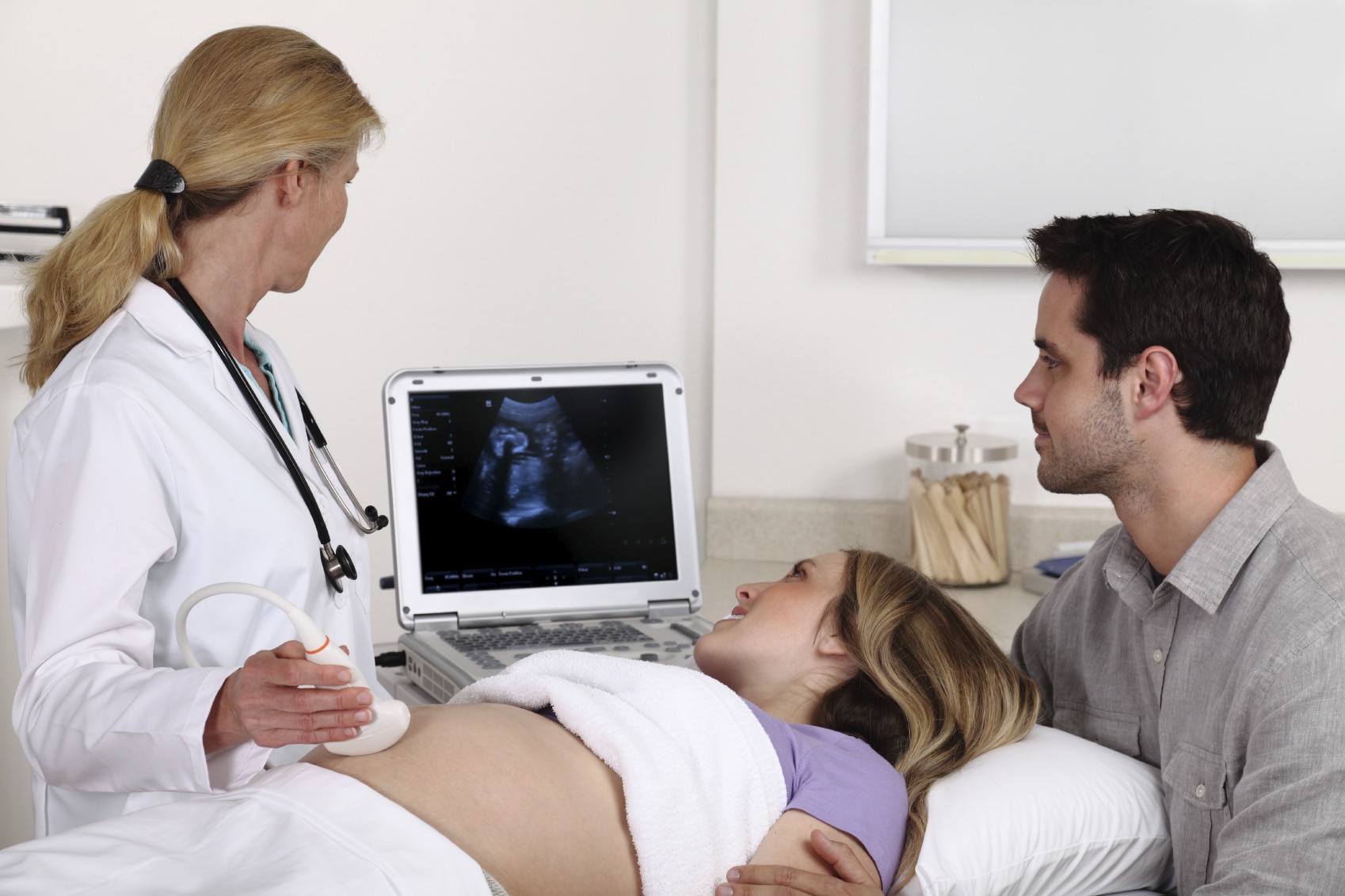
    ultrasoundAn ultrasound (or sonogram) is a non-surgical method of getting a picture of your baby. Ultrasound involves the use of high-frequency sound waves. The sound waves are directed into your uterus with a small plastic device called a transducer. The sound waved reflect off of bones and tissues and are then converted into black and white images on a screen.

    An ultrasound can be done at any time during pregnancy and may be repeated at different stages to monitor your baby’s growth and development if there is cause for concern. An advanced-level (level two) ultrasound is offered only when a problem is suspected. Usually, ultrasounds are offered between the 16th and 20th weeks of pregnancy. By that time, major structural abnormalities can be diagnosed and all four chambers of the heart can be seen (making it possible to detect some congenital heart defects.) A fetal heart can be seen beating as early as 5 or 6 weeks into your pregnancy.

    Ultrasound is one of the most valuable methods of evaluating the development of your baby and placenta. Ultrasounds are usually performed: to confirm pregnancy (or detect miscarriage), date the pregnancy (an ultrasound exam is extremely accurate for judging the fetal age before 20 weeks), learn the number of babies, evaluate risks to the pregnancy (such as implantation location of the embryo in an abnormal location), examine the baby for structural malformations, determine the location and development of the placenta, evaluate the growth and development of the baby and asses health of the baby by monitoring movements.

    Trans-vaginal ultrasounds are sometimes preferred for investigating pregnancy complications during the first trimester. For this test, a small transducer is inserted in the vagina up to the entrance of the uterus to create images of the baby on the monitor. This can be used in early pregnancy for a better view of the baby and placenta.

    More Tests

    Amniocentesis
    Chorionic Villus Sampling (CVS)
    Contraction Stress test (CST)
    Glucose Tolerance Testing
    Hemoglobin Test
    MSAFPT Test
    Non-Stress (NST) Test
    Rh Factor
    Triple Screen Test
    Ultrasound

  • Varicose Veins

    Varicose Veins

    varicose veinsWhen your blood volume and hormone levels increase with pregnancy and blood vessels in your legs become engorged, you may experience varicose veins. Your enlarged uterus tends to press against major veins in your pelvic region, adding to the problem. In addition, varicose veins run in families, so if your mother got them, you may predisposed to get them also.

    Varicose Veins Symptoms

    The symptoms of varicose veins includes pain, tenderness and aching in your legs, along with possible swelling of your ankles. Sometimes varicose veins cause no discomfort at all. Visibly, they can appear as bluish enlarged, bulging veins and can be somewhat rope-like. To prevent or minimize them, limit your standing time and rest as often as possible, with your feet elevated. Try to keep from crossing your legs and wear clothing that is loose, rather than clothes that can restrict circulation in your legs. The good news is varicose veins usually disappear within three months of delivery.

    more Discomforts

    Backaches
    Breast Discomfort
    Braxton Hicks Contractions
    Constipation
    Dizziness and Fainting
    Fatigue
    Hand Numbness
    Headaches
    Heartburn and Indigestion
    Hemorrhoids
    Increased Discharge
    Itchy Abdomen
    Leg Cramps
    Nausea and Morning Sickness
    Overheating
    Pelvic Pressure
    Sleep Trouble
    Swelling
    Urinary Problems
    Varicose Veins

  • Urinary Problems

    When your uterus puts pressure on your bladder, as it grows (also when your baby drops, close to delivery), you may experience mild incontinence and frequent urination or urinary problems. Read more of the article below:

    Urinary problems are common, especially in the third trimester, to have trouble with leaking small amounts of urine when you sneeze or cough, often referred to as “stress incontinence”.

    By doing Kegel exercises, you can tighten and tone the muscles in your pelvis, which can help control incontinence. Wearing a panty liner or sanitary pad may make you feel more comfortable. By avoiding fluids right before bedtime can reduce your bathroom trips during the night, although make sure you are getting the recommended eight 8-ounce glasses of water during the day.

    more Discomforts

    Backaches
    Breast Discomfort
    Braxton Hicks Contractions
    Constipation
    Dizziness and Fainting
    Fatigue
    Hand Numbness
    Headaches
    Heartburn and Indigestion
    Hemorrhoids
    Increased Discharge
    Itchy Abdomen
    Leg Cramps
    Nausea and Morning Sickness
    Overheating
    Pelvic Pressure
    Sleep Trouble
    Swelling
    Urinary Problems
    Varicose Veins

  • Teen Options

    Being a teen and pregnant may seem like a difficult experience now, but with the right support and information, you will be able to make a decision and feel that you can feel good about. There are crisis pregnancy centers (most likely in your town or very close by) that can help support you in your pregnancy decisions, as well as offer many other valuable services. They have trained counselors that can help you sort through the pros and cons of each option and explore the solutions that would work best in your life. There are 24-hour crisis pregnancy hotlines you can call and countless crisis pregnancy sites to help you on-line.

    You have three basic options: parenting, adoption or abortion. In order to make the right decision for you and your baby, you need to know everything about each of these options. This is a decision no one else should make for you. You can consider other people’s thoughts and ideas, but don’t make a decision because you think it will please your parents, your baby’s father or anyone else. Ultimately you are the one who has to live with the final decision. This may be the biggest decision you have to make, so take plenty of time to think things through carefully. Whatever you decide, please remember that your choice will affect you for the rest of your life – physically and emotionally.

    Parenting

    Parenting is a difficult but extremely rewarding experience that requires both patience and strength. If you choose to continue your pregnancy and parent, not only will you be able to watch your child grow up, you will be preparing yourself for one of the greatest and most rewarding experiences ever. However, a lot of responsibilities come with parenting, which you must realize now and accept. Parenting is a lifelong commitment to your child, promising him or her the best care possible, undying love, financial, physical, emotional, and spiritual support. It takes time and hard work to be a good parent, but it can happen. There are many resources available to help you, if you choose to parent your child.

    Read more on teen pregnancy:

    Teen Options (continued)
    Teen Pregnancy
    Teen Statistics

  • Teen Adoption

    When a teen becomes pregnant, some very serious decisions need to be made and those decisions should not be made lightly as they will affect her for the rest of her life rather she realizes it or not.

    Adoption

    For many teens facing an unplanned pregnancy, adoption is a positive option. Adoption can give you the freedom to pursue your goals and know that you have made a caring decision for your child. Choosing life for your baby and giving a wonderful gift to another family is a very courageous and wonderful thing. There are many couples that can’t have their own children and are waiting to adopt a child. Counselors and support groups are available through most adoption agencies to help with the emotions surrounding adoption. If you decide on adoption, you can choose to have it open or closed. An open adoption is when you get to choose the parents who will be raising your baby and a closed adoption is when everything is kept private.

    Abortion

    Many pregnant teens decide to have an abortion because they believe it will be a quick resolution to a difficult situation. Often teens who give in to the idea of abortion are pressured into it by their partners. In a survey taken of women who have had abortions, 63% of them felt “forced” by other people into the abortion, and 74% of the women surveyed said they would not have the abortion again. Make up your own mind based on factual information. You have time. Don’t make any quick decisions based on fear, panic or pressure.

    Read more on teen pregnancy:

    Teen Pregnancy
    Teen Statistics

  • The Second Stage of Labor

    During the second stage of labor, your cervix is fully-dilated to 10 centimeters and as your baby makes his or her way down the birth canal, your contractions may actually space out to about 2-4 minutes apart and become more regular. This may allow you to rest and take a breather briefly between contractions. Although it may be difficult, rest and save your strength for pushing.

    Pushing and Delivery

    At this point, the pressure on your rectum increases and the urge to push becomes overwhelming, as your baby descends. You may feel more in control once pushing begins, as well as a sense of relief to be able to play a more active role in the birth process. You may also experience a burst of renewed energy as delivery draws ever-so-close. The urge to push usually feels the strongest at the peak of a contraction, then fades toward the end.

    Positioning and breathing will impact your pushing. Unless you are making significant progress, you may be advised to change positions about every half hour, which may enhance progress. Allow your partner (or support person) to help you into a semi-sitting or a semi-squatting position, which allows gravity to work for you, not against you. Squatting utilizes gravity, helping your pelvis to open up and make more room for your baby. It can also take some pressure off your back. Some hospitals even have squat bars that you can hold onto, or you can use your partner for added support.

    The side-lying position may also help ease back pressure, if you are experiencing “back labor” during pushing. For this position, you or your partner may hold up your top leg. A common position for pushing is having your feet in stirrups, while lying on your back. This position is most convenient for your doctor or midwife if you need an episiotomy, although gravity doesn’t help you out much while using this position.

    Whatever position you choose when pushing, take a deep breath, hold it in, bear down and concentrate. Curl into the push as much as you can, rounding your shoulders, putting your chin to your chest, allowing all of your muscles to work to help ease your baby into the world. Don’t be alarmed if you pass small amounts of urine or feces during the pushing stage, because many women do and it’s completely normal. It can even mean you are pushing effectively. Remember, every push brings you that much closer to holding your baby in your arms.

    Birth

    Some women want to use a mirror to see their baby’s head and may want to touch it as well. Seeing or feeling your baby’s head crown may give you added inspiration to keep pushing. Just before your baby is born, you may feel a burning, stinging or stretching sensation at the opening of your vagina. This often happens as your perineum widens to allow your baby’s head to descend (often called “crowning”) and your baby to pass through the birth canal.

    As your baby’s head emerges, it typically turns to one side to allow the shoulders to align. Once your baby’s head is delivered, you may be asked to stop pushing, so his or her airway can be cleared of excess mucus, by suctioning your baby’s nose and mouth. After that’s done, your doctor or midwife may assist the rest of the body out, usually with one last push. Congratulations! You have a brand new baby!

    Back to Labor Stages

  • Signs of Labor

    It’s not known what brings labor on, but it’s believed that hormones such as prostaglandins stimulate uterine activity and trigger oxytocin release, softening and thinning the cervix. Your body goes through a series of changes when it’s preparing for labor. Although the signs vary from woman to woman (as well as from pregnancy to pregnancy), once your labor has begun, the strong, painful contractions will ultimately give you a clue that it’s time for your little one to be born.

    At first, especially if this is your first pregnancy, you may not know the difference between true labor and false labor signs, making you unsure of what exactly you are experiencing. Becoming familiar in advance with the signs of labor will help you to distinguish the difference when the time comes. If you think you may be going into labor, don’t feel embarrassed to call your doctor or midwife to ask questions, no matter what time of day or night, or go to the hospital.

    Diarrhea, Nausea, Increased Energy

    Labor can start out with signs as simple as experiencing frequent diarrhea and nausea/upset stomach. Some women find themselves suddenly flooded with energy, when the nesting instinct kicks in full-force. Lower back pain and abdominal cramping aren’t uncommon either.

    Rupture of Membranes

    If you’re water breaks, that’s a definite sign that your time is drawing near of holding your little one. When your membranes rupture, it can feel like a little trickle or a big gush of fluid. This is the amniotic fluid that has surrounded your baby in the amniotic sac for nine months. Many times, your water won’t break until later stages of labor, or may even have to be broken manually by your doctor or midwife at the hospital. If you think your water has broken, call your doctor or midwife, because they will most likely want you to come to the hospital. The longer between when your water breaks and when delivery occurs, the greater chance of infection. Use a towel or pad to make you feel more comfortable, never use tampons while pregnant.

    Loss of Mucus Plug

    You may experience the loss of your mucus plug or “blood show” at the onset of labor, although it can occur as early as 2-3 weeks before delivery. This mucus-like discharge may be thick, bloody and stringy. This “plug” is the barrier that seals the opening of your cervix throughout pregnancy, preventing infection. Sometimes it dislodges as your cervix begins to thin and dilate (open). Make sure to let your doctor or midwife know if this happens, especially if it’s heavy and bright red, which could indicate something serious.

    Contractions

    Labor contractions start out similar to Braxton-Hicks contractions, beginning mild and relatively painless. But unlike Braxton-Hicks, they progressively get stronger and longer in duration. Also, true labor contractions will not let up by changing positions or resting, which false labor contractions tend to do. They continue and don’t go away, no matter what you do, they may even get stronger and intensify with activity. When you are really in labor, your contractions gradually become more regular and typically develop a pattern. They commonly begin in your lower back and radiate forward, like waves. False labor contractions are usually just centered in your abdomen and stay there. Your abdomen will feel very hard (usually much harder than Braxton-Hicks), like a basketball during these contractions, which you can feel by placing your hand on your belly. And unlike false labor contractions, real contractions will dilate and efface your cervix.

    Back to Labor Stages

  • Stages of Labor

    Every woman’s labor is different, following it’s own pattern (even from pregnancy to pregnancy) and there are some things that can’t be anticipated. Although every labor and birth is unique and your labor will unfold in a very special way, the process is remarkably and beautifully constant. You can expect a sequence of events, when everything goes smoothly.

    Labor is typically divided into three distinct stages. The first stage being when your cervix softens, dilates and thins out (effacement), ending in full dilation.

    The first stage can be divided into three “phases”: the early (or latent phase), the active phase and the transition phase. The second stage of labor is when your baby passes through the birth canal and is born. During the third stage, the placenta (afterbirth) is delivered.

    Signs of Labor
    Preterm Labor
    Preterm Complications
    Preterm Labor Causes
    Preterm Prevention and Treatment
    First Stage: Phase I
    First Stage: Phase II
    First Stage: Phase III
    Second Stage
    Third Stage
    Induction of Labor
    Induction of Labor Procedures
    Labor Induction Risks
    Do It Yourself Labor Induction

  • Pregnancy Illness

    It is bad enough being sick when you’re not pregnant, but when illnesses such as colds, the flu, virus’ and sometimes food poisoning occur during pregnancy, they can make you feel absolutely miserable. It’s rare for a woman to go through 9 months of pregnancy without coming down with some type of illness at least once.

    Boost Your Immune System

    Your immune system is affected during pregnancy, which can make you more vulnerable to infections, such as coughs, colds and the flu, as well as make your symptoms persist longer than usual. You can boost your immune system by eating a healthy well-balanced diet including plenty of fresh fruit and vegetables, which contain certain antioxidant vitamins, including vitamin C. These help to fight infections and may help keep you from getting sick in the first place. Also, make sure you are taking your prenatal vitamins daily. Since prevention is so important, staying away from people who are sick may be your best bet for staying well.

    To help alleviate some of the discomforts that can accompany colds or the flu, drink plenty of fluids to maintain your nutritional intake (most important if you have diarrhea or are vomiting). Water, chicken broth, fresh juice, warm tea, jello, and even popsicles are all good options. Freshly squeezed juice is better than juice from concentrate, since it contains more vitamins, minerals and enzymes, as well as less sugar. Herbal teas may be helpful, especially ginger, Echinacea and peppermint. It is best to speak with your doctor or midwife before taking any herbs, because some may be harmful during pregnancy. A drink made up of hot water, honey and lemon may soothe a sore throat, as well as gargling with a warm salt water solution.

    If your nasal passages are dry, help moisten them by using a steam vaporizer or a humidifier. You can have one going in your bedroom, close to your face when you sleep at night. During the day, you can make a tent out of a towel draped over your head and stay underneath it for 15 minutes, three or four times a day. If you don’t have a humidifier, you can also use a pan of steaming water. Saline drops or saline nasal sprays (found at most drugstores) can help, if you are bothered by nasal stuffiness. A warm shower may be an even better way to clear mucus out, if you are congested (besides being relaxing!).

    Sleep helps the body to heal itself. Rest as much as possible when you’re coming down with the flu or a cold. If you have trouble with nasal symptoms, sleep in a recliner or elevate your head with lots of pillows, so you are in a semi-upright position. Also, you might try rubbing a mentholated product on your chest, following the directions on the package carefully.

    Dealing with Fevers

    If you have a fever, you should carefully monitor your temperature by taking it twice a day and if it rises to over 100 degrees Fahrenheit, contact your doctor or midwife. You should also call, if you begin to cough up green or yellow mucus, experience a severe sore throat, if your symptoms last for more than a week or if you’re worried about certain symptoms that seem unusual.

    The good news is that while a cold can make you quite miserable, it poses no special risks during pregnancy. The flu, however, can be more serious in pregnant women and may sometimes lead to pneumonia. Since flu shots are safe for both you and baby, it’s wise to get one during flu season if you’re past the first trimester. Sometimes medications are necessary, but you should never take over-the-counter cough or cold remedies without checking with your doctor or midwife beforehand, since some contain substances that may be harmful in pregnancy, including alcohol.

  • Hemorrhoids in Pregnancy

    A common discomfort in pregnancy is hemorrhoids. You may experience hemorrhoids when blood flow increases and your growing uterus puts pressure on your rectum and perineum. Hemorrhoids are basically enlarged (varicose) veins in the rectal area that can become worse late in pregnancy and may even bleed slightly. Sometimes they are caused by straining because of constipation.

    Try to avoid constipation by drinking plenty of water and making sure you have enough fiber in your diet.  This will help you prevent hemorrhoids due to constipation.

    Warm sitz baths may bring some relief, as well as ice packs (or witch hazel pads, cooled in the refrigerator) if they become very uncomfortable.  Hemorrhoids occur the most in the third trimester although they can present themselves at anytime when constipated.  Hemorrhoids can be extremely painful.

    More Pregnancy Discomforts

    Backaches
    Breast Discomfort
    Braxton Hicks Contractions
    Constipation
    Dizziness and Fainting
    Fatigue
    Hand Numbness
    Headaches
    Heartburn and Indigestion
    Hemorrhoids
    Increased Discharge
    Itchy Abdomen
    Leg Cramps
    Nausea and Morning Sickness
    Overheating
    Pelvic Pressure
    Sleep Trouble
    Swelling
    Urinary Problems
    Varicose Veins

  • Heartburn and Indigestion

    When stomach muscles relax due to increased levels of pregnancy hormones, indigestion and heartburn can occur.  Another reason for heartburn is that your uterus puts pressure on your stomach in the last half of pregnancy.  You may experience a burning sensation close to your heart, as stomach acid irritates the lining of your esophagus.

    Remedies for Heartburn

    To help avoid heartburn, avoid spicy, greasy and fried foods and eat smaller meals, chewing your food slowly and thoroughly. Don’t lay down right after eating a meal and it most likely will help to sleep at night with your head slightly elevated by extra pillows. Don’t take any antacids without consulting with your doctor or midwife beforehand.

    More Pregnancy Discomforts

    Backaches
    Breast Discomfort
    Braxton Hicks Contractions
    Constipation
    Dizziness and Fainting
    Fatigue
    Hand Numbness
    Headaches
    Heartburn and Indigestion
    Hemorrhoids
    Increased Discharge
    Itchy Abdomen
    Leg Cramps
    Nausea and Morning Sickness
    Overheating
    Pelvic Pressure
    Sleep Trouble
    Swelling
    Urinary Problems
    Varicose Veins

  • Pregnancy Headaches

    When a combination of common hormonal changes, fatigue and also stress put a strain on your body during pregnancy, you may experience headaches, especially during the first trimester. Relaxation, meditation and yoga may help, if your discomfort is caused by a tension headache. Proper nutrition, along with frequent meals can help you avoid hunger headaches that are triggered by low blood sugar. Stay away from smoky, unventilated rooms and get plenty of fresh air. A walk outside maybe just what you need. Also, keeping up your fluid intake can be very useful in alleviating headache symptoms. Don’t take any pain medications without being directed by your doctor or midwife.

    More Pregnancy Discomforts

    Backaches
    Breast Discomfort
    Braxton Hicks Contractions
    Constipation
    Dizziness and Fainting
    Fatigue
    Hand Numbness
    Headaches
    Heartburn and Indigestion
    Hemorrhoids
    Increased Discharge
    Itchy Abdomen
    Leg Cramps
    Nausea and Morning Sickness
    Overheating
    Pelvic Pressure
    Sleep Trouble
    Swelling
    Urinary Problems
    Varicose Veins