Category: Pregnancy

  • 17 Weeks Pregnant

    17 Weeks Pregnant

    If you are pregnant and at 17 weeks, your baby is about 4 inches in length (crown-to-rump) and weighs close to 3 ounces. Your baby is forming “brown fat” deposits under his or her skin now. This fat will help your baby to maintain his or her body temperature after birth.

    Your little one is drinking an average of 16 ounces of amniotic fluid a day now and also inhaling and exhaling it, in preparation for breathing after birth. Your baby may get hiccups at this point, although you probably won’t be able to feel them quite yet.

    The taste buds are developed enough now for your baby to distinguish sweet and bitter and more reflexes are developing, including blinking. Your baby’s movements have become more coordinated and soon you will start to feel him or her exercising muscles.

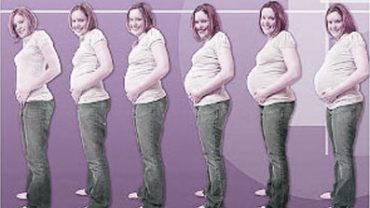
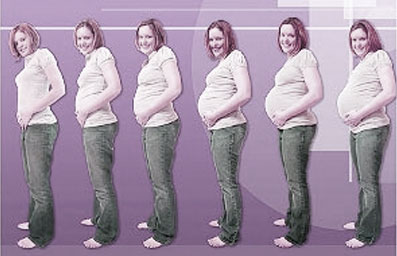
    You, as well as others notice your expanding belly easily now. Your uterus has grown significantly since the early weeks of pregnancy and this needs to be supported by your muscles and ligaments. Round ligaments are attached to each side of the upper uterus and also to the pelvic side wall. These ligaments are stretching to accommodate your enlarging uterus, which may explain the general achiness and pain you may notice in your belly. If you experience this type of discomfort, lying down may help.

    Many women begin to experience the first detectable movements of their baby (called quickening) around this time, which can easily be described as one of the most exciting moments of your pregnancy and will undoubtedly be very reassuring. You may be more likely to feel your baby earlier if you are thin or if this is your second pregnancy.
    << more weeks >>

  • 16 Weeks Pregnant

    16 Weeks Pregnant

    16 weeks pregnant
    If you are pregnant and at 16 weeks, your baby is a little over 4 inches in length (crown-to-rump) and weighs about 2 – 3 ounces. Rapid and sustained growth will continue all through this week, as muscles grow stronger and your baby’s head and neck grow straighter. The body is finally starting to catch up with the head growth now.

    Your baby’s eyes are sensitive to light and if a bright light is held against your belly, it may gradually move its hands up to shield its eyes, even though they are still firmly closed. Your little baby’s genitals are formed well enough now that it may be possible to tell the gender on ultrasound, although ultrasounds can be wrong when it comes to gender determination, especially done this early in pregnancy.

    Your uterus will continue to move upwards which will start to relieve the pressure on your bladder, and as a result, your need for frequent urination should be reduced. The top of your uterus has risen up, so you can probably feel it easily about 3 inches below your belly button.

    Sleeping on your belly has most likely become too uncomfortable, while sleeping on your back may cause your growing uterus to compress major blood vessels (the aorta and the inferior vena cava). You will need to learn to sleep on your side, using extra pillows for support.

    Some women experience constipation during pregnancy and a change in bowel habits. Make sure that you drink lots and lots of water, as much as eight 8-ounce glasses a day and add extra fiber to your diet. Exercise also helps, so try going for a daily walk.

    << more weeks >>

  • 15 Weeks Pregnant

    15 Weeks Pregnant

    pregnant 15 weeks
    If you are pregnant and at around the 15 weeks mark, your baby is about 4- inches in length (crown-to-rump) and weighs a little over 2 ounces. Your baby can move around in the amniotic fluid and may feel like fluttering sensations or even a gas bubble to you. If you cant feel anything now, that’s normal since most women don’t notice any movements until closer to the 18th week.

    Eyebrows and eyelashes are present and the hair on your baby’s head is getting thicker. Your baby’s skin is still very thin and transparent, making the blood vessels underneath clearly visible. The development of your baby’s genitals has been continuing and they are now nearing the point where they could be identified by ultrasound.

    Your uterus is just popping up above the pubic bone. You are at a very in-between stage right now and your favorite pair of jeans may not fit anymore, especially around the waist. Your uterus is easily felt and your doctor or midwife will use its position to check the progress of your pregnancy, measuring the distance from the top of your pubic bone to the top of the fundus.

    Your breasts are already beginning to form colostrum in preparation for your baby’s birth. Colostrum is the thin yellowish fluid that usually feeds your baby the first few days after birth- before your milk comes in, although some pregnant women may notice a little leaking out throughout their pregnancy, especially towards their due date.

    << more weeks >>

  • Pregnancy Week 8

    Pregnancy Week 8

    pregnancy week 8
    At week 8 of your pregnancy your baby is a little more than 1/2 of an inch in length (crown-to-rump) and changing shape, becoming more and more recognizable as a human. Your baby’s head is quite big and still way out of proportion to his or her body, due to the rapid growth of the brain.

    Your baby’s facial features are becoming more defined and the external ears are now present. Teeth are forming under the gums and your baby’s cartilage and bones are developing and hardening. Major joints are forming, allowing your baby’s arms to bend at the elbow.

    Your baby’s fingers are discernible and toe rays appear on the foot plates. The cells that will become either testes or ovaries arrive, but you can’t tell by looking whether your baby is a girl or a boy, yet.

    Your uterus is getting larger and you may begin to notice your clothes becoming slightly more snug, although these changes are very gradual. You have probably noticed that you need to urinate more frequently now as the growing uterus puts pressure on your bladder. This is quite common, since your baby is growing and also hopefully you are increasing your fluid intake.

    Start your pregnancy right by seeing a doctor or midwife. Your first prenatal appointment may occur about now. Your doctor or midwife will likely go over your medical history and ask you some questions about your health. You will have your blood pressure taken, your weight documented and you’ll have a urine test done. You may also have some blood tests done this time and possibly a pelvic exam, if you haven’t had one recently.

    << more weeks >>

  • Pregnancy – Week 12

    Pregnancy – Week 12

    BABY

    By the end of this week of pregnancy, your baby will be about 2 1/2 inches in length (crown-to-rump) and will weigh about 14 grams. Your baby’s digestive system (small intestines) is starting to function and is capable of producing contractions that push food through the bowels. After your baby swallows, urine can be excreted from your baby’s kidneys into the amniotic fluid, at this stage as well. The amniotic fluid is completely replaced every 3 hours, so your baby’s environment stays fresh.

    Your baby will start to develop some new reflexes now such as: opening and closing his or her mouth, clenching fists, curling toes and even making facial expressions. Your baby has periods of being awake and asleep, although these are relatively short and you won’t be able to tell when these periods are quite yet.

    MOM

    Your uterus has grown in size and can now be felt above your pelvic bone. Your doctor or midwife will be able to feel it during an abdominal exam. Your uterus will increase in capacity about 500 to 1,000 times during your pregnancy, to hold your growing baby, the placenta and amniotic fluid. You may notice a dark line running down the center of your abdomen from the top to the bottom of your belly. This line is referred to as the “linea nigra” and will most likely fade back to normal after you deliver your baby.

    Now that you are officially twelve weeks along, your chance of miscarriage has reduced significantly, so you may be able to relax a bit more and begin to enjoy your pregnancy. Many women begin sharing their exciting pregnancy news with their loved ones now (if not before!). Some people may have already guessed that you are pregnant, especially if this is a second or third pregnancy, because of your swollen, growing abdomen.

    << more weeks >>

  • 11 Weeks Pregnant

    11 Weeks Pregnant

    If you are pregnant and at 11 weeks, your baby is between 1- 2 inches in length (crown-to-rump) and weighs approximately 8 grams. Your baby’s most vital internal organs are fully formed and functional, but will continue to grow. The head is almost half the length of the entire body, but its growth begins to slow.

    During this week ossification centers will form in the skull and continue to develop and become a little more solid. Your baby’s little fingers and toes are growing nails now. The intestines are beginning to migrate into the abdominal cavity at this stage. Your baby’s external genitalia are present now and shows male and female characteristics, but are difficult to distinguish this early in development.

    Your uterus just about fills your pelvis and if you press your fingers into your belly just above your pubic bone, you may be able to feel it. You may be starting to think about maternity clothes at this point, but probably won’t need them for another month or more, depending on if this is your first pregnancy or not.

    You may notice a significant increase in your vaginal discharge at this time, which is quite common. The odorless (or mild-smelling) whitish discharge is called leukorrhea. It’s caused by increased blood flow to the vaginal area because of increased estrogen levels. This discharge tends to increase as your pregnancy progresses and you may have to wear sanitary pads or panty liners to feel more comfortable.

    << more weeks >>

  • 10 Weeks Pregnant

    10 Weeks Pregnant

    If you are pregnant and at 10 weeks, your baby is between 1 – 1 1/2 inches in length (crown-to-rump) and weighs close to 5 grams. Your baby’s umbilical cord is now completely formed and is performing the important function of delivering nutrients and oxygen to your developing baby.

    The arms and legs are growing longer and your baby toes and fingers are becoming recognizable, although they are still webbed. By this week, the external ears should be fully formed and visible, but your baby’s head is still large in relation to the rest of his or her body. Your baby’s heart will continue to develop and grow and the heartbeat may be picked up using a Doppler device.

    Even though you don’t look pregnant yet, you may start to gain some weight now; probably only 3-5 pounds so far. Your body temperature has risen slightly, caused by increased blood volume.

    You may find that you feel warmer than you did previously and your veins will become more noticeable. Due to normal hormonal changes during pregnancy, your gums may become softer and swollen. They may even bleed at times. You need to brush and floss them regularly to avoid gum infections.

    You may find yourself feeling very emotional and moody at this point, which is perfectly normal. Pregnancy hormones have this affect on your emotional state, causing shifts in your mood and for you to cry more easily.

    << more weeks >>

  • More on Episiotomies (continued)

    Many recent studies have shown that routine episiotomies shouldn’t be performed, because they are not helpful to the majority of women, although there are certain circumstances when they are needed. Having an episiotomy can increase pain during the postpartum period, leading to a longer recovery time. In addition, women who have episiotomies may have weaker pelvic floor muscles as well as more pain when resuming intercourse postpartum.

    Episiotomy rates have declined over the years, but the number still remains high. Despite all the evidence against routine episiotomy use, close to 50- 80% of first time moms end up with an episiotomy in the U.S. The majority of women having them done are young white women, who have private insurance, according to a recent study.

    There are a few situations when an episiotomy may be medically necessary. If there is a sign that your baby is in distress while in the birth canal, such as slowing of your baby’s heart rate, an episiotomy may be unavoidable for the sake of your baby’s well-being. If your baby’s shoulders get stuck, if your baby has a very large head that cannot fit through the vaginal opening or if delivery happens too quickly for the skin of your perineum to stretch naturally, you may need an episiotomy.

    Perineal message helps reduce the chance of tearing during birth and the need for an episiotomy. It can make the perineum more flexible and increase elasticity, in preparation for birth. It’s a good idea to start doing perineal massage around the 34th week of pregnancy or before. To perform perineal massage, wash your hands thoroughly (or your partner). Place K-Y jelly, vitamin E oil or another mild lubricant on one or two fingers and gently stretch the lower part of the vagina until you feel a slight burning sensation. Hold the pressure steady for about 2 minutes or so. Repeat this daily for about 8-10 minutes.

    Warm compresses during labor (especially during the pushing stage) encourage the stretching and relaxing of the perineum. Make sure they are only warm, but not hot, which can cause some swelling. Positioning during labor and birth may contribute to whether you need an episiotomy or not. Squatting can help reduce tearing. Avoid laying directly on your back, if possible and keep changing positions if you can. Talk to your doctor or midwife early about your feelings regarding episiotomies, especially if you wish to avoid one.

  • Episiotomy

    A small incision during delivery is an episiotomy. Right before your baby’s head emerges during delivery, in the pushing stage of labor, you may be given an injection of local anesthetic and your doctor or midwife may make a small incision in the skin between your vagina and anus (your perineum). This is called an episiotomy. An episiotomy is usually a second degree cut in both the skin and muscle of your perineum made for the purpose of enlarging your vaginal opening to assist in delivering your baby. The incision is closed with stitches after your baby and the placenta have been delivered. It is one of the most common medical procedures performed on women and also one of the most controversial.

    There are two main types of cuts: a midline (the most common), which is a cut directly towards the anus and a mediolateral, which is a diagonal cut toward the side. The most common are second degree and the least common are fourth degree cuts.

    Many doctors believe that an incision heals more easily than a tear. Other claimed benefits of episiotomy include prevention of possible third or fourth degree lacerations, lacerations that reach the anus, incontinence later on, damage to the pelvic floor and injury to the baby, as well as shortening the pushing stage; leading to a quicker delivery. Some doctors say that episiotomies are preferred, because they are simply easier to repair.
    <<click here for the rest of the article on episiotomies.>>

  • Teen Pregnancy

    Teen Pregnancy

    teen-pregnancyPregnancy is one of the most difficult and stressful experiences a teen might ever face. If you are a teen facing an unplanned pregnancy, you are not alone. Millions of other teens have gone through (and survived!) the same thing and most of those pregnancies were unplanned also. You may have been surprised when you found out or even hoped it wasn’t true. One of the first thoughts that may come to mind is that your life is over, fortunately, that isn’t so. Before you freak out, take a deep breath and just remember you are in charge of your life. There are many resources available to you.

    Feeling ashamed, confused, overwhelmed, sad, scared and a little excited at the same time are all natural reactions at this point. You may be wondering how to break the news to your parents, what your friends’ reactions will be, as well as what effects this pregnancy might have on your relationship with your baby’s father. You may also be curious to know how your life will change, what you can do to have a healthy baby and what it takes to become a good mom. It will take a while to adjust to the fact that you’re going to have a baby, since it’s a huge change. It’s completely natural for you to wonder whether you’re ready to handle the responsibilities that come with motherhood.

    You may want to know where you should go for help. It’s important to talk to people who can support you and help you sort through your feelings and options. You can go to your family, a trusted friend, your pastor or even a school counselor or nurse, depending on your situation. Sharing the news of your pregnancy can be one of the most difficult conversations to have, but you might be amazed by the support of your parents and friends.

    Take good care of yourself so that you and your baby will be healthy. You need to see a doctor or gynecologist (OB/GYN) as soon as possible to begin getting prenatal care. Your doctor will prescribe prenatal vitamins for you (or recommend an over-the-counter brand), which help ensure your health as well as prevent some types of birth defects in your baby. If you get the proper prenatal care early in your pregnancy and make the right choices, you have a very good chance of preventing health problems for your baby, as well as yourself.

    Read more on teen pregnancy:

    Teen Pregnancy (continued)
    Teen Statistics
    Teen Options

  • 14 Weeks – Pregnant

    14 Weeks – Pregnant


    If you are pregnant and at 14 weeks, your baby is between 3 and 4 inches in length (crown-to-rump) and weighs about 2 ounces now. Fine hair is forming on your little one’s head, as well as downy hair all over his or her body, which is called lanugo. Most of the hair that covers your baby’s body will disappear before birth.

    Your baby’s neck is longer and now complete and your baby’s fingerprints have appeared. As your baby’s facial muscles attach themselves, your baby is able to smile, frown and make cute expressions.

    Your baby is able to suck his or her thumb now, since the sucking reflex is developed, which you might get lucky enough to catch on ultrasound. You most likely will begin to hear your baby’s heartbeat during your monthly prenatal visits from now on.

    You may want to consider buying some maternity clothes now (or at least some larger, loose-fitting clothes that are less restrictive), because your uterus is becoming noticeably thicker. You may be suffering from heartburn, indigestion and bloating now. Wearing loose-fitting clothes, along with eating small frequent meals may help bring you some relief.

    You may also be suffering with more frequent headaches as a result of the changes in your hormone levels. Drinking plenty of fluids and getting an adequate amount of sleep can prevent this from happening.

    << more weeks >>

  • 13 Weeks – Pregnant

    If you are pregnant and at 13 weeks, your baby is about 2 – 3 inches in length (crown-to-rump) and weighs close to 1 1/2 ounces. Your baby’s face has a distinctly human appearance and is really starting to look like a little baby. Your baby’s chest is rising and falling as he or she practices breathing movements.

    All twenty baby teeth are formed and waiting beneath the gums until well after your baby’s arrival. Vocal cords are now developing in the voice box, forming the larynx, even though your baby won’t be able to make any sound until after birth. Your baby has many reflexes and squirms inside of your belly, as well as turns his or her head from one side to the other.

    Your uterus has grown quite a bit and loose-fitting clothes may be much more comfortable by now. You aren’t extremely big yet, so you’re probably feeling quite comfortable. Your appetite will start increasing, as your nausea fades into only a bad memory and you may begin to feel a little less tired.

    You may notice that your sense of smell has become more sensitive and some women even notice an odd metallic taste in their mouths which affects the taste of foods. These likely are caused by changes in your hormone levels during pregnancy.

    << more weeks >>